 PickVids
Best Audio & video engineering Videos
「Audio & video engineering」下面有76部被不同的人、在不同月份推荐过的视频。挑的时候先看对象:入门9部,适合还没学过的人;进阶14部,适合已经懂术语的人;普通向52部,按兴趣就能看;更硬的1部,留给想看推导或细节的人。这一类数量最多的是讲解,所以它们的共同点是用一个图像或类比把一个概念补上。常出现的频道包括Technology Connections、Techmoan、Benn Jordan。目录给这个主题划的范围是:Audio and video technology: analog and digital audio, speakers, amplifiers, microphones, television standards, frame rates, codecs, streaming formats, display technology.如果只看三部,就从《D/A and A/D | Digital Show and Tell (Monty Montgomery @ xiph.org)》开始,它负责把问题讲出画面;然后看《The world's worst video card?》,换一种讲法或例子;最后看《Floyd Toole - Sound reproduction – art and science/opinions and facts》,留给已经有基础的人。页面按每页24部切开,顺序看的是被推荐跨越了多少个月,不是播放量。每条标题下面那一句是这部片子自己的内容说明,用来区分它在讲定义、过程、演示还是观点。点进去能看到推荐原话、原文链接和适合谁看。看的时候把强烈推荐当成有人明确叫你去看,把引用当成只是拿来举例,把批评留下来对照,不要把每条评论都当成同一力度。

D/A and A/D | Digital Show and Tell (Monty Montgomery @ xiph.org)
Monty Montgomery of Xiph.org gives real-time demonstrations of sampling, quantization, bit depth and dither using real audio equipment, including both digital analysis tools and vintage analog bench gear.
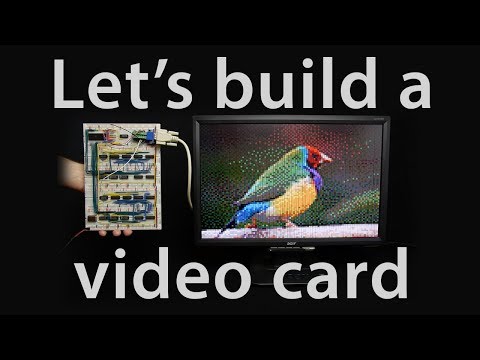
The world's worst video card?
Ben Eater explains how VGA signals work and builds a breadboard circuit that produces correct sync timing so a monitor recognizes the signal.

Floyd Toole - Sound reproduction – art and science/opinions and facts
Floyd Toole's CIRMMT distinguished lecture on the science of sound reproduction, drawing on decades of blind listening research.

MiniDisc - An Appreciation
Techmoan's 45-minute retrospective on Sony's MiniDisc, covering the first and last machines, ATRAC, MD-LP, Net-MD and HiMD.

Cassettes - better than you don't remember
Techmoan's beginner introduction to the compact cassette, testing metal tapes and Dolby S noise reduction on a Sony TC-S1 deck.

Why is TV 29.97 frames per second?
Matt Parker explains the history behind NTSC television running at 29.97 frames per second rather than 30, tracing it to the backward-compatible addition of color.

E-paper hacking: fastest possible refresh rate
Ben Krasnow of Applied Science explains how electrophoretic e-paper displays work and how he modified the driver firmware and waveform lookup tables of a 4.2-inch panel to reach roughly 3Hz partial refresh.

Atari's Quadrascan Explained
Retro Game Mechanics Explained dissects how Atari's Quadrascan vector displays and vector generator hardware drew games like Asteroids and Tempest.

CD / Color
Captain Disillusion's comedic, fast-paced explainer on how color works in cameras, displays and video.

Virtual Barber Shop (Audio...use headphones, close ur eyes)
A binaural audio demo, the 'Virtual Barber Shop', that places a barber moving around your head.

Segmented Displays
Posy explores segmented displays, from the seven-segment display to alternative designs with fewer or more segments, with patents and history.

Star Trek TNG Ambient Engine Noise (Idling for 24 hrs)
A 24-hour loop of Star Trek TNG starship engine ambience, meant as background sound for relaxing, sleeping or concentrating.

Vintage Electronics - The Tefifon
Techmoan demonstrates the Tefifon, a vintage German audio player that combines elements of record and tape with a grooved elastic loop.

Riding the Booster with enhanced sound
Footage from a camera on a Space Shuttle solid rocket booster from liftoff through descent, with audio enhanced by Skywalker Sound from the original camera microphones.

Gaslighting Your Fans w/ Dolby ATMOS™
Musician and audio engineer Benn Jordan tries Dolby Atmos as a consumer, covering the theory of immersive audio, its business model, and home theater and headphone listening.

World’s Best Speakers!
Tech Ingredients shows how to build flat panel speakers from exciters and foam board, with construction guidelines, measured SPL comparisons and a complete system playing music.

what did you do
Noodle explores how retro pixel art was designed for CRT displays and why games look different on LCDs, with input from pixel artists and CRT researchers.

Google I/O 2013 - High Performance Audio
A Google I/O 2013 talk by Android audio engineers on why reliable, low-latency audio is hard on the platform.

The Superheterodyne Radio: No really, that's its name
Technology Connections explains why the superheterodyne radio has its name and how mixing frequencies lets it tune stations well.
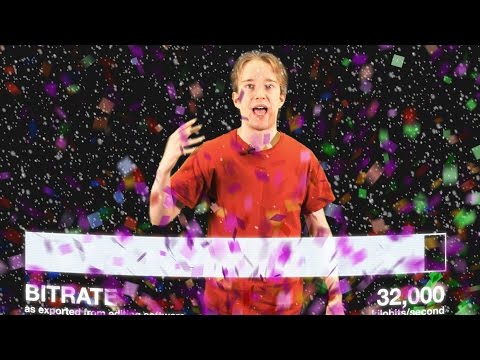
Why Snow and Confetti Ruin YouTube Video Quality
Tom Scott explains why confetti and snow wreck video quality, using interframe compression and bitrate.

How To Draw Mushrooms On An Oscilloscope With Sound
Jerobeam Fenderson shows how to draw a mushroom on an oscilloscope in XY mode using stereo audio, then animates it by modulating with a larger wave.

E-Ink on Android, and other new things!
A Technology Connections update video in which Alec Watson tests an Onyx Boox Max e-ink Android tablet used as an external display and shares channel news.

I could hardly believe my eyes! - Looking Glass Holographic Monitor
Linus Tech Tips reviews the Looking Glass 8K holographic display, a glasses-free 3D monitor.

The Loudness War
A two-minute demonstration of the loudness war, showing how heavy dynamic range compression in CD mastering makes music louder while degrading sound quality.