 PickVids
Best Computer architecture & CPUs Videos
「Computer architecture & CPUs」下面有148部被不同的人、在不同月份推荐过的视频。挑的时候先看对象:入门8部,适合还没学过的人;进阶60部,适合已经懂术语的人;普通向45部,按兴趣就能看;更硬的35部,留给想看推导或细节的人。这一类数量最多的是演讲,所以它们的共同点是一位讲者把一个判断讲完,例子是为了撑住这个判断。常出现的频道包括Linus Tech Tips、Ben Eater、Gamers Nexus。目录给这个主题划的范围是:Computer architecture: CPU design, pipelines, caches, RISC-V, ARM, x86, GPUs, memory, branch prediction, supercomputers, mainframes, benchmarks, Moore's law.如果只看三部,就从《8-bit computer update》开始,它负责把问题讲出画面;然后看《Light Years Ahead | The 1969 Apollo Guidance Computer》,换一种讲法或例子;最后看《“Hello, world” from scratch on a 6502 — Part 1》,留给已经有基础的人。页面按每页24部切开,顺序看的是被推荐跨越了多少个月,不是播放量。每条标题下面那一句是这部片子自己的内容说明,用来区分它在讲定义、过程、演示还是观点。点进去能看到推荐原话、原文链接和适合谁看。看的时候把强烈推荐当成有人明确叫你去看,把引用当成只是拿来举例,把批评留下来对照,不要把每条评论都当成同一力度。
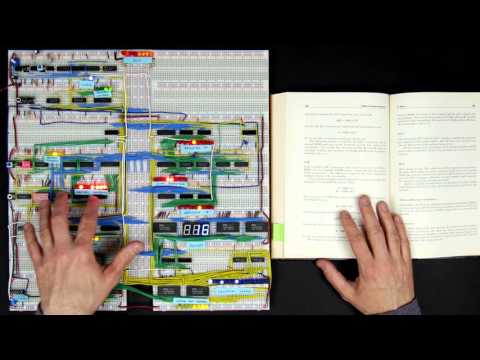
8-bit computer update
Ben Eater's short update announcing his plan to build another 8-bit computer from scratch on camera.

Light Years Ahead | The 1969 Apollo Guidance Computer
Robert Wills of TNMoC explains the Apollo Guidance Computer hardware and software, then walks through the Apollo 11 landing procedure step by step, including the 1202 alarms.

“Hello, world” from scratch on a 6502 — Part 1
Ben Eater starts a series building a working computer on breadboards around the 6502 microprocessor.

Finding the Missing Memristor - R. Stanley Williams
R.
The Ultimate Game Boy Talk (33c3)
Michael Steil's 33c3 talk explains essentially everything about the Game Boy: CPU, video hardware, peripherals, and the tricks used by games and demos.

The Thirty Million Line Problem
Casey Muratori's long talk arguing that modern software has ballooned to tens of millions of lines because of hardware and OS diversity.

USENIX ATC '21/OSDI '21 Joint Keynote Address-It's Time for Operating Systems to Rediscover Hardware
Timothy Roscoe of ETH Zurich delivers the joint USENIX ATC/OSDI 2021 keynote arguing that operating systems must reckon with modern hardware, which is a heterogeneous collection of processors, firmware and coprocessors rather than a simple machine.

Jim Keller: Moore's Law, Microprocessors, and First Principles | Lex Fridman Podcast #70
Lex Fridman interviews legendary chip architect Jim Keller about Moore's Law, microprocessor design, and first-principles thinking.

34C3 - The Ultimate Apollo Guidance Computer Talk
Michael Steil and Christian Hessmann's 34C3 talk explaining the Apollo Guidance Computer end to end: hardware design, operating system, and mission software.

Jim Keller: Moore’s Law is Not Dead
Jim Keller gives a UC Berkeley EECS colloquium arguing that Moore's Law is not dead.

"Programming a 144-computer chip to minimize power" - Chuck Moore (2013)
Chuck Moore, inventor of Forth, presents GreenArrays' 144-core asynchronous chip at Strange Loop 2013.

NaN Gates and Flip FLOPS
Tom Murphy (suckerpinch) presents a deliberately trollish computer architecture built on IEEE-754 floating point, using NaN and infinity to define logic gates.
Richard Feynman Computer Science Lecture - Hardware, Software and Heuristics
A lecture by Richard Feynman on how computers work, using the analogy of a filing clerk that becomes progressively dumber and faster.
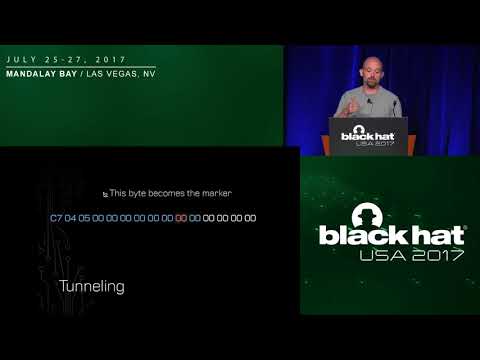
Breaking the x86 Instruction Set
Christopher Domas presents at Black Hat 2017 how page fault analysis and processor fuzzing can exhaustively search the x86 instruction set.

Guarding Against Physical Attacks: The Xbox One Story — Tony Chen, Microsoft
Microsoft's Tony Chen explains how the Xbox One was designed to resist physical attacks, including secure boot, encrypted memory, a security processor and a hypervisor.

Simple Code, High Performance
Casey Muratori's University of Twente guest lecture is a case study in how straightforward code can cut thousands of lines and tens of seconds of runtime down to a few dozen lines running in under a second.

C++ and Beyond 2012: Herb Sutter - atomic Weapons 1 of 2
Herb Sutter's deep C++ and Beyond 2012 talk on atomics and the C++ memory model, covering why programmers chasing top performance need to understand hardware ordering.

How does a USB keyboard work?
Ben Eater explains how a USB keyboard communicates, covering the electrical interface, bit and packet encoding, packet contents, and a comparison with PS/2.

Robust-first computing: Demon Horde Sort (full version)
Dave Ackley demonstrates the Demon Horde Sort, an inherently robust sorting machine running in his Movable Feast Machine simulator.

CGA Graphics - Not as bad as you thought!
The 8-Bit Guy covers IBM's 1981 CGA graphics system, including how composite output and artifacting produced extra colors beyond the nominal palette.

Over 200,000 Servers in One Place! Visiting Hetzner in Falkenstein (Germany)
Overclocker der8auer tours Hetzner's Falkenstein data center in Germany, showing custom racks, own mainboards, passively cooled servers and ATX-style cases on shelves.

Java on a 1000 Cores - Tales of Hardware / Software CoDesign
Cliff Click of Azul Systems gives a Google Tech Talk on running Java business applications on a machine with about a thousand cores.

Stanford Seminar - The Soul of a New Machine: Rethinking the Computer
Bryan Cantrill of Oxide Computer Company gives a Stanford EE380 talk on rethinking the server.

Admiral Grace Hopper Explains the Nanosecond
Admiral Grace Hopper holds up a length of wire to show how far light travels in a nanosecond, about 11.8 inches.