 PickVids
Best Space exploration & spaceflight Videos
「Space exploration & spaceflight」下面有164部被不同的人、在不同月份推荐过的视频。挑的时候先看对象:入门5部,适合还没学过的人;进阶29部,适合已经懂术语的人;普通向127部,按兴趣就能看;更硬的3部,留给想看推导或细节的人。这一类数量最多的是讲解,所以它们的共同点是用一个图像或类比把一个概念补上。常出现的频道包括SpaceX、Scott Manley、Everyday Astronaut。目录给这个主题划的范围是:Space exploration: NASA, SpaceX, Starship, rockets, Apollo, Mars missions, JWST, space stations, satellites, orbital mechanics, Carl Sagan, Kerbal-style explainers, space policy.如果只看三部,就从《Light Years Ahead | The 1969 Apollo Guidance Computer》开始,它负责把问题讲出画面;然后看《The Solar Gravitational Lens will Map Exoplanets. Seriously.》,换一种讲法或例子;最后看《34C3 - The Ultimate Apollo Guidance Computer Talk》,留给已经有基础的人。页面按每页24部切开,顺序看的是被推荐跨越了多少个月,不是播放量。每条标题下面那一句是这部片子自己的内容说明,用来区分它在讲定义、过程、演示还是观点。点进去能看到推荐原话、原文链接和适合谁看。看的时候把强烈推荐当成有人明确叫你去看,把引用当成只是拿来举例,把批评留下来对照,不要把每条评论都当成同一力度。

Light Years Ahead | The 1969 Apollo Guidance Computer
Robert Wills of TNMoC explains the Apollo Guidance Computer hardware and software, then walks through the Apollo 11 landing procedure step by step, including the 1202 alarms.

The Solar Gravitational Lens will Map Exoplanets. Seriously.
Explains the proposed NASA JPL plan to use the Sun as a gravitational lens, sending solar sail craft to its focal region to image an exoplanet's surface.

34C3 - The Ultimate Apollo Guidance Computer Talk
Michael Steil and Christian Hessmann's 34C3 talk explaining the Apollo Guidance Computer end to end: hardware design, operating system, and mission software.
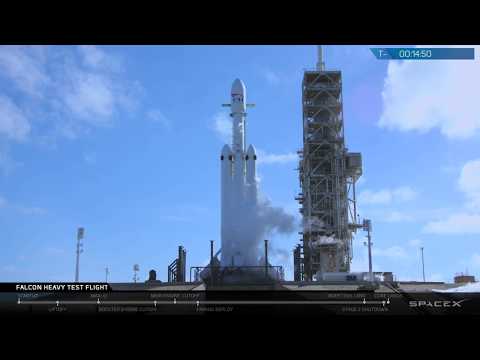
Falcon Heavy Test Flight
SpaceX's livestream of the Falcon Heavy test flight, including the launch, side booster landings and Tesla Roadster payload.

I Was SCARED To Say This To NASA... (But I said it anyway) - Smarter Every Day 293
Destin Sandlin of Smarter Every Day gives a talk to an aerospace audience, comparing how Apollo was engineered and managed with NASA's Artemis program.

Starbase Tour with Elon Musk [PART 1 // Summer 2021]
Tim Dodd of Everyday Astronaut tours SpaceX's Starbase with Elon Musk as guide.
Carl Sagan - Pale Blue Dot
Carl Sagan's narration of the Pale Blue Dot passage, reflecting on the Voyager photograph of Earth as a tiny speck in space.

Apollo Guidance Computer Part 1: Restoring the computer that put man on the Moon
The first episode of CuriousMarc's series restoring a real Apollo Guidance Computer, led by AGC expert Mike Stewart.

Dr. Robert Zubrin with a brilliant answer to "Why Should We Go To Mars?"
A short clip of Dr.

The REAL Possibility of Mapping Alien Planets!
PBS Space Time explains the proposal to use the Sun's gravity as a giant lens, sending a train of small light-sail spacecraft to the focal point roughly 550 AU out.
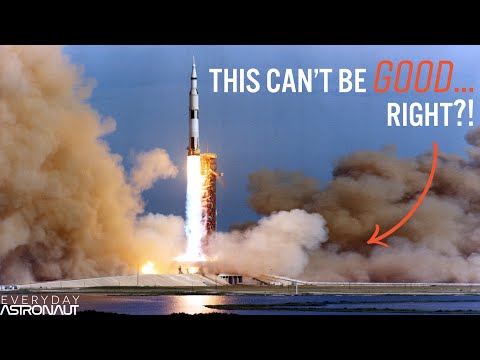
How Much Do Rockets Pollute? Are They Bad For Our Air?
Everyday Astronaut's Tim Dodd runs an hour-long, data-driven analysis of what rockets actually emit and how that compares with airliners and other industries.

Orbital Rings
Isaac Arthur explains the orbital ring, a megastructure launch-assist system that could move bulk cargo cheaply to orbit and beyond.
How Far Are The Nearest Stars?
Cody's Lab builds a 200-billionth-scale model to show how far away the nearest stars are, using parallax and light speed.

HOW ROCKETS ARE MADE (Rocket Factory Tour - United Launch Alliance) - Smarter Every Day 231
Destin Sandlin tours United Launch Alliance's rocket factory with CEO Tory Bruno, showing friction stir welding, structural rocket skins and large milled parts.
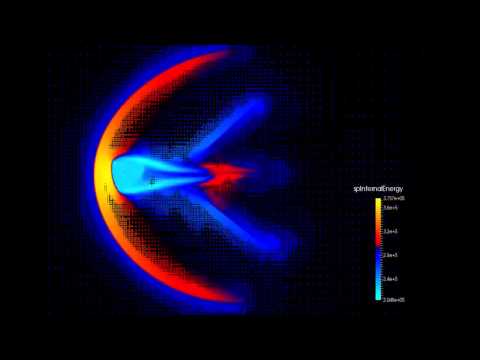
GPUs to Mars: Full-Scale Simulation of SpaceX's Mars Rocket Engine
SpaceX engineers present at NVIDIA's GPU Technology Conference on a multi-physics code that simulates the full-scale Raptor methane engine.

7 Minutes of Terror: The Challenges of Getting to Mars
NASA JPL engineers explain the final minutes of the Curiosity rover's entry, descent and landing on Mars, which combined aerobraking, a parachute and a skycrane.

Is SpaceX's Raptor engine the king of rocket engines?
Everyday Astronaut explains the basic physics of rocket engines, the main engine cycles and fuel types, then compares SpaceX's methane-fueled full-flow staged combustion Raptor to other engines.

Turning Earth Into a Telescope | The Terrascope
David Kipping presents his proposed Terrascope, a telescope that uses Earth's atmosphere as a lens to achieve enormous magnification.

How to Move the Sun: Stellar Engines
Kurzgesagt explains stellar engines such as the Shkadov thruster and Caplan thruster, which could move the Sun and solar system across the galaxy over millions of years to avoid hazards and reach new regions.
End of Space – Creating a Prison for Humanity
Kurzgesagt explains how accumulating space junk could trigger a collision cascade (Kessler syndrome) that makes launches too dangerous and traps humanity on Earth.

Mars Helicopter (before it went to Mars)
Veritasium's Derek Muller visits NASA JPL to see the Mars helicopter Ingenuity before it was mounted on the rover.

Mike Mullane - Normalisation of deviance - IAFF - Part 1
Astronaut Mike Mullane explains normalisation of deviance, where teams gradually come to accept violations of their own safety standards.

Colonizing Mars
Isaac Arthur's in-depth look at what it would take to settle and eventually terraform Mars.
How To Terraform Venus (Quickly)
Kurzgesagt lays out a speculative plan to terraform Venus, covering its hostile atmosphere and how it might be made Earth-like, with a sources page linked.