 PickVids
Best University lectures & courses Videos
「University lectures & courses」下面有127部被不同的人、在不同月份推荐过的视频。挑的时候先看对象:入门48部,适合还没学过的人;进阶39部,适合已经懂术语的人;普通向32部,按兴趣就能看;更硬的8部,留给想看推导或细节的人。这一类数量最多的是课堂讲座,所以它们的共同点是用上课的节奏把一条推导走完,而不是只丢结论。常出现的频道包括MIT OpenCourseWare、Stanford、Jordan B Peterson。目录给这个主题划的范围是:Full university lectures and course series: MIT OpenCourseWare, Stanford, Harvard lectures, introductory course lecture 1, lecture series across subjects, professor lectures.如果只看三部,就从《How to Speak》开始,它负责把问题讲出画面;然后看《1. Introduction to Human Behavioral Biology》,换一种讲法或例子;最后看《LEADERSHIP LAB: The Craft of Writing Effectively》,留给已经有基础的人。页面按每页24部切开,顺序看的是被推荐跨越了多少个月,不是播放量。每条标题下面那一句是这部片子自己的内容说明,用来区分它在讲定义、过程、演示还是观点。点进去能看到推荐原话、原文链接和适合谁看。看的时候把强烈推荐当成有人明确叫你去看,把引用当成只是拿来举例,把批评留下来对照,不要把每条评论都当成同一力度。

Real Analysis, Lecture 1: Constructing the Rational Numbers
The first lecture of Francis Su's Harvey Mudd real analysis course, covering the construction of the rational numbers.

Marc Levoy - Lectures on Digital Photography - Lecture 1 (21mar16).mp4
The first lecture in an 18-part series on digital photography from Marc Levoy's Stanford CS 178 course, recorded at Google in 2016.

Nuclear 101: How Nuclear Bombs Work Part 1/2
Harvard Belfer Center lecture by Matthew Bunn explaining how nuclear bombs work, including fission and fusion weapons and which parts of bomb-making are hard.

Hamming, Intro to The Art of Doing Science and Engineering: Learning to Learn (March 28, 1995)
The introductory lecture of Richard Hamming's capstone course, The Art of Doing Science and Engineering: Learning to Learn.

Ses 1: Introduction and Course Overview
First session of MIT 15.401 Finance Theory I (Fall 2008) taught by Andrew Lo, giving a course overview and introducing core finance concepts.

Raft lecture (Raft user study)
John Ousterhout lectures on the Raft consensus algorithm, made for the Raft user study comparing how students learn Raft and Paxos.

Entanglement and Complexity: Gravity and Quantum Mechanics
Leonard Susskind lectures at Stanford on how gravity and quantum information theory have merged into a new way of thinking about physics.
Lecture 1 - How to Start a Startup (Sam Altman, Dustin Moskovitz)
The opening lecture of the How to Start a Startup course at Stanford, with Sam Altman covering ideas and products and Dustin Moskovitz discussing why to start a startup.
Why is Ukraine the West's Fault? Featuring John Mearsheimer
University of Chicago lecture in which John Mearsheimer argues the West, through NATO and EU expansion, bears primary responsibility for the Ukraine crisis.

2012 Burnett Lecture Part 1 Keynote Speaker: Russell A. Barkley, Ph.D.
Russell Barkley gives the keynote at UNC's 2012 Burnett Seminar on ADHD.
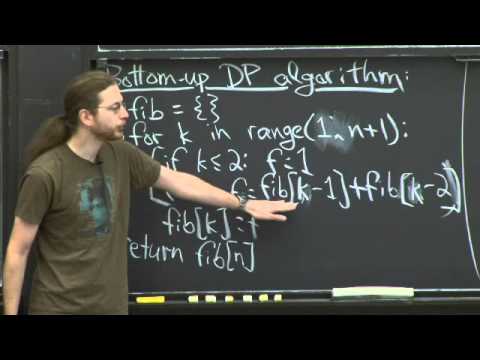
Lecture 19: Dynamic Programming I: Fibonacci, Shortest Paths
Erik Demaine's MIT 6.006 lecture introducing dynamic programming through Fibonacci numbers and shortest paths.

Lecture 1 | Programming Paradigms (Stanford)
The first lecture of Stanford's CS107 Programming Paradigms, taught by Jerry Cain, giving an overview of the course.

2. Behavioral Evolution
Stanford biologist Robert Sapolsky lectures on the evolution of behavior, including the Prisoner's Dilemma and tit-for-tat strategies in animals.

How to Find Product Market Fit - Stanford CS183F: Startup School
Segment co-founder and CEO Peter Reinhardt recounts how his company found product-market fit, including how a product grew out of a small feature of another.

Building Your Own Dynamic Language
Ian Piumarta's 2007 Stanford EE380 lecture on building a dynamic programming environment from the ground up, from the Viewpoints Research Institute's work.

Lecture: Biblical Series I: Introduction to the Idea of God
Jordan Peterson's first lecture in his Biblical Series examines the idea of God as sovereignty and power abstracted from any individual ruler, and as the pattern inherent in human dominance hierarchies.
Lec 1 | MIT 6.00 Introduction to Computer Science and Programming, Fall 2008
First lecture of MIT 6.00, an introductory computer science course taught in Python by Eric Grimson and John Guttag.

Lecture 1: Introduction to Power and Politics in Today’s World
The opening lecture of Ian Shapiro's Yale course Power and Politics in Today's World, which examines political dynamics and institutions over the past quarter century, including inequality, declining unions and new forms of authoritarianism.

Donald B. Gillies Lecture: Dr. Michael Stonebraker
Turing Award winner Michael Stonebraker gives the 2018 Donald B.
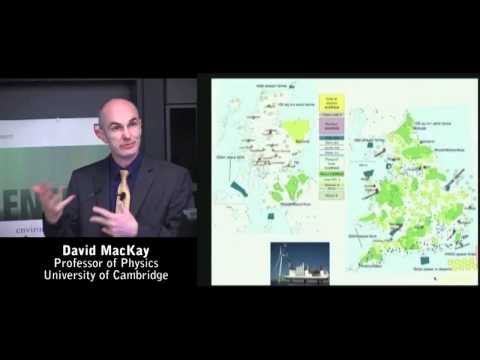
Sustainable Energy - Without the Hot Air with David MacKay
David MacKay, scientific advisor to the UK energy department, gives a Harvard talk on sustainable energy at macro and micro scale, drawn from his book Sustainable Energy Without the Hot Air.

Robert Sapolsky: The Biology of Humans at Our Best and Worst
A 73-minute Stanford talk by Robert Sapolsky drawn from his book Behave.

Lecture 1: Probability and Counting | Statistics 110
Lecture 1 of Harvard's Statistics 110 with Joe Blitzstein, introducing sample spaces, the naive definition of probability, counting, binomial coefficients and the sampling table.

Lecture 1 | Natural Language Processing with Deep Learning
The first lecture of Stanford's Natural Language Processing with Deep Learning course, taught by Chris Manning and Richard Socher.

23. Language
Robert Sapolsky's Stanford lecture on language, comparing human and animal communication, ape language projects like Koko and Kanzi, and how language is acquired.