 PickVids
Best Computer architecture & CPUs Videos
The 148 Computer architecture & CPUs videos here were recommended by different people across different months. Choose by who it is for: 8 introductory, 60 intermediate, 45 for a general viewer, and 35 for someone who wants the harder derivation. Most of them are a talk. What they share is that one speaker finishes a claim, and the examples exist to hold that claim up. Channels you will keep seeing include Linus Tech Tips, Ben Eater, Gamers Nexus.

Oral History of Gary Davidian, part 2 of 2
Part two of a Computer History Museum oral history with Gary Davidian, covering his work on the 68000 emulator for PowerPC at Apple, Power Computing, clean-room contracting and later performance optimization work.
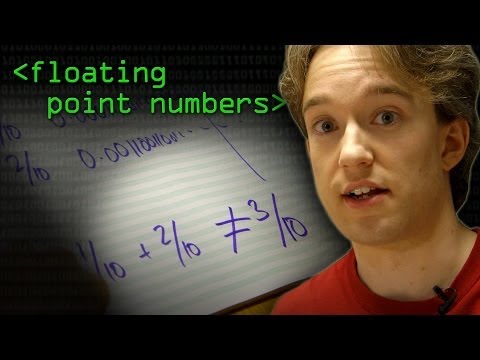
Floating Point Numbers - Computerphile
Tom Scott explains for Computerphile how floating point numbers work, why moving the binary point is fast, and why it handles money badly.

Hetzner shows Special AM5 Board with 90° Rotated Socket
Der8auer tours Hetzner's test lab and shows a custom AM5 server motherboard with the CPU socket rotated 90 degrees, built for rack airflow in their AX52 servers.

AMD Ryzen Eco Mode Deep-Dive & Benchmarks on R9 7950X (Zen 4)
Gamers Nexus benchmarks the Ryzen 9 7950X in its BIOS Eco Mode presets (65W, 105W and stock 170W).

SGI Indigo2: An $86,000 Workstation from 1995
LGR looks at the Silicon Graphics Indigo2, a UNIX workstation that cost about $86,000 in 1995, covering its pros and cons, games it can run, and whether it is worth owning today.

Sophie Wilson - The Future of Microprocessors
Sophie Wilson, designer of the ARM instruction set, discusses the future of microprocessors, including the economics of scaling below 28nm and why much of a chip must stay powered off.

Tomb Raider on the Nintendo Game Boy Advance is incredible | MVG
Modern Vintage Gamer looks at OpenLara, an open source Tomb Raider engine, running on the Game Boy Advance.

How are Microchips Made? 🖥️🛠️ CPU Manufacturing Process Steps
Branch Education walks through a semiconductor fab and the dozens of steps used to turn silicon wafers into microchips, with 3D animation.

Oral History of Chuck Peddle
A Computer History Museum oral history of Chuck Peddle, the engineer behind the 6502 and the Commodore PET, covering his career from GE through Motorola and MOS Technology.

Why build an entire computer on breadboards?
Ben Eater explains why he builds computers on breadboards, including testing their signal behavior on an oscilloscope.

Fixing Apple's GOOD Engineering - M1 MacBook Air thermal pads
Linus Tech Tips opens up an M1 MacBook Air to test whether better thermal pads could improve performance in the fanless design.

Trends in Deep Learning Hardware: Bill Dally (NVIDIA)
Bill Dally of NVIDIA gives a University of Washington lecture on trends in deep learning hardware.

Racing the Beam Explained - Atari 2600 CPU vs. CRT Television
Retro Game Mechanics Explained shows how the Atari 2600 draws images with almost no video memory, by having the CPU race the CRT beam line by line.

Megaprocessor Tour 1 - (fixed audio)
A short tour of the Megaprocessor, a microprocessor built at enormous scale from tens of thousands of discrete transistors.

An astonishing old calculator - Numberphile
Cliff Stoll shows and explains his two Friden EC-132 electronic calculators for Numberphile.

Anton: A Special-Purpose Machine That Achieves a Hundred-Fold Speedup in Biomolecular Simulations
David Shaw of D.

GOD MODE UNLOCKED - Hardware Backdoors in x86 CPUs
Christopher Domas's Black Hat talk demonstrates a hardware backdoor in a third-party x86 processor, a hidden core that grants root from userland.

36C3 - Uncover, Understand, Own - Regaining Control Over Your AMD CPU
A 36C3 talk on the AMD Platform Security Processor, an undocumented ARM core inside AMD CPUs that runs before the main processor.

Joanna Rutkowska: Towards (reasonably) trustworthy x86 laptops
Joanna Rutkowska's 32C3 talk asks whether trustworthy client systems can be built on x86 hardware, and what realistically can be done about the challenges, such as Intel ME.

Seymour Cray's Only Surviving Talk: "Cray-1 Introduction" (1976, LANL)
Seymour Cray's only surviving recorded talk, introducing the Cray-1 supercomputer in 1976.

14nm and 7nm are NOT what you think it is - Visiting Tescan Part 3/3
Der8auer visits Tescan and uses an electron microscope to compare real transistor sizes on Intel 14nm and AMD 7nm chips.

[11] Mike Clark, AMD Zen Chief Architect
Ian Cutress interviews Mike Clark, AMD's chief architect of Zen, about his career since the K5, how Zen began and how CPUs are designed.

Jim Keller - Moore's Law in the age of AI Chips
Jim Keller's talk at the 2020 Scaled Machine Learning conference on Moore's Law in the age of AI chips.

The Universe is Hostile to Computers
Veritasium explains how cosmic rays and other particles flip bits in computer memory, with examples including a Belgian election count error, plane incidents and game glitches.