 PickVids
Best Cosmology & astrophysics Videos
The 108 Cosmology & astrophysics videos here were recommended by different people across different months. Choose by who it is for: 10 introductory, 8 intermediate, 88 for a general viewer, and 2 for someone who wants the harder derivation. Most of them are an explainer. What they share is that one picture or analogy is used to supply a missing concept. Channels you will keep seeing include PBS Space Time, Kurzgesagt – In a Nutshell, Isaac Arthur.
TIMELAPSE OF THE FUTURE: A Journey to the End of Time (4K)
A 29-minute cinematic timelapse by melodysheep that journeys trillions of years into the future, covering the death of the sun, the end of stars, proton decay, black hole evaporation and the fate of the cosmos.

The Solar Gravitational Lens will Map Exoplanets. Seriously.
Explains the proposed NASA JPL plan to use the Sun as a gravitational lens, sending solar sail craft to its focal region to image an exoplanet's surface.

Powers of Ten™ (1977)
The Eames Office's 1977 film Powers of Ten starts at a picnic in Chicago and zooms out by a factor of ten every ten seconds to the edge of the universe.
'A Universe From Nothing' by Lawrence Krauss, AAI 2009
Lawrence Krauss's 2009 talk on the current picture of the universe, how it will end and how it could have come from nothing.

A new way to visualize General Relativity
ScienceClic explains why the rubber sheet analogy for general relativity is misleading and offers a new visualization that includes the curvature of time and shows gravity as motion through curved spacetime.
Carl Sagan - Pale Blue Dot
Carl Sagan's narration of the Pale Blue Dot passage, reflecting on the Voyager photograph of Earth as a tiny speck in space.

The REAL Possibility of Mapping Alien Planets!
PBS Space Time explains the proposal to use the Sun's gravity as a giant lens, sending a train of small light-sail spacecraft to the focal point roughly 550 AU out.
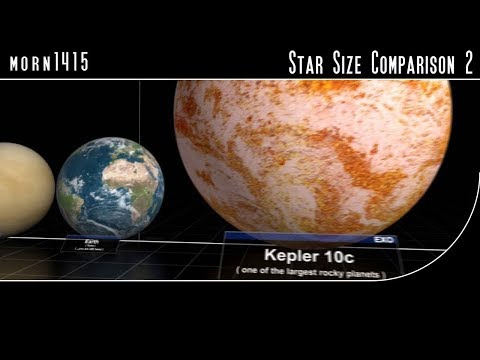
Star Size Comparison 2
A visual scale comparison of stars and cosmic objects, from planets up to some of the largest known stars, set to music.

What Everyone Gets Wrong About Gravity
Veritasium explains, with expert input, that in general relativity gravity is not a force and objects follow straight paths through curved spacetime, including why standing on the ground means you are accelerating.
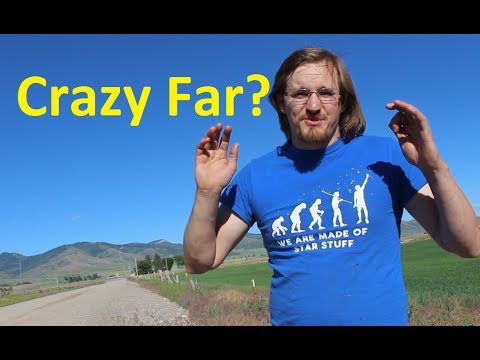
How Far Are The Nearest Stars?
Cody's Lab builds a 200-billionth-scale model to show how far away the nearest stars are, using parallax and light speed.

Leonard Susskind on The World As Hologram | TVO Docs
Stanford physicist Leonard Susskind gives a public lecture on the holographic principle, the indestructibility of information and the nature of black holes.

Civilizations at the End of Time: Iron Stars
An Isaac Arthur episode on civilizations in the far future, past the Black Hole Era.
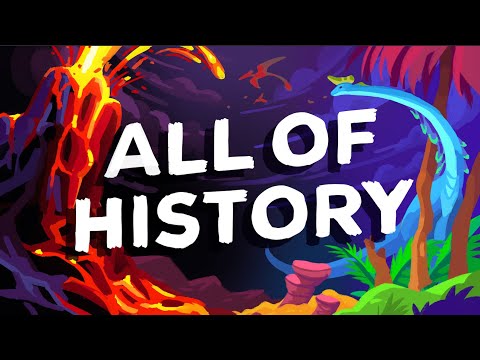
4.5 Billion Years in 1 Hour
Kurzgesagt's hour-long animated film that compresses Earth's 4.5 billion year history into one hour, roughly a million years per second.

Turning Earth Into a Telescope | The Terrascope
David Kipping presents his proposed Terrascope, a telescope that uses Earth's atmosphere as a lens to achieve enormous magnification.

How to Move the Sun: Stellar Engines
Kurzgesagt explains stellar engines such as the Shkadov thruster and Caplan thruster, which could move the Sun and solar system across the galaxy over millions of years to avoid hazards and reach new regions.

How Time Becomes Space Inside a Black Hole | Space Time
A PBS Space Time episode explaining how space and time swap roles inside a black hole's event horizon.

dark matter is not a theory
Physicist Angela Collier argues that dark matter is not a theory but a set of observations, covering rotation curves, the CMB and why modified gravity struggles to explain them.

Civilizations at the End of Time: Black Hole Farming
An Isaac Arthur episode on civilizations in the dark, post-stellar universe, including black hole farming, accretion disks and the Penrose process as energy sources.
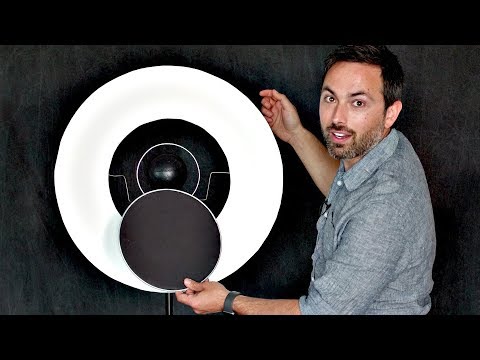
How to Understand What Black Holes Look Like
Veritasium explains what a black hole should look like, using J.P.

Entanglement and Complexity: Gravity and Quantum Mechanics
Leonard Susskind lectures at Stanford on how gravity and quantum information theory have merged into a new way of thinking about physics.
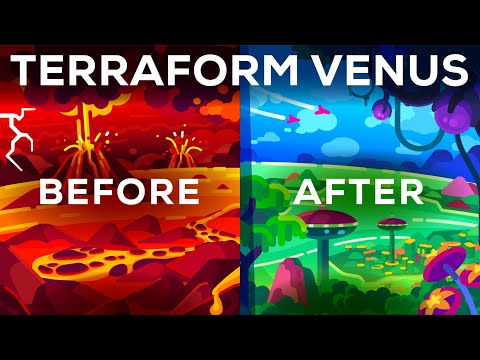
How To Terraform Venus (Quickly)
Kurzgesagt lays out a speculative plan to terraform Venus, covering its hostile atmosphere and how it might be made Earth-like, with a sources page linked.

The Moon's Orbit is WEIRD
A minutephysics explainer showing that the Moon's path around the Sun is not a spiral but closer to a 12-sided polygon with curved corners.
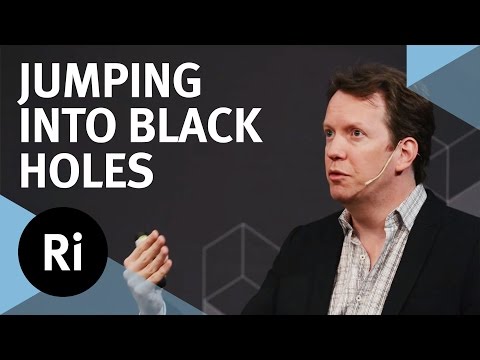
Black hole Firewalls - with Sean Carroll and Jennifer Ouellette
A Royal Institution event with Sean Carroll and Jennifer Ouellette on what happens if you fall into a black hole, covering the firewall paradox, the information problem and the holographic principle.
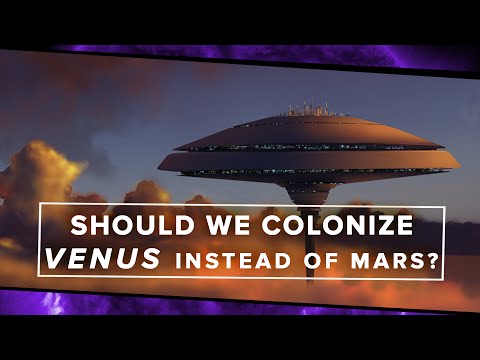
Should We Colonize Venus Instead of Mars?
A PBS Space Time episode asking whether Venus would be a better colonization target than Mars.