 PickVids
Best Everyday physics & science demos Videos
The 166 Everyday physics & science demos videos here were recommended by different people across different months. Choose by who it is for: 6 introductory, 20 intermediate, 139 for a general viewer, and 1 for someone who wants the harder derivation. Most of them are an explainer. What they share is that one picture or analogy is used to supply a missing concept. Channels you will keep seeing include Veritasium, SmarterEveryDay, Technology Connections.

Hovering a Helicopter is Hilariously Hard - Smarter Every Day 145
Smarter Every Day host Destin Sandlin tries to hover a helicopter and finds it very hard.

Firing the Lorentz Plasma Cannon
LightningOnDemand revives a pulsed Lorentz plasma cannon, using modern capacitors to extend its range and increase the delivered energy.

Testing if 60 minutes of silence drives you crazy
Veritasium's Derek Muller spends an hour in a silent, dark anechoic chamber at BYU to test the claim that 45 minutes is the most anyone can bear.

BTD10: The 835kph Sailplane and Dynamic Soaring
Spencer Lisenby explains dynamic soaring, a technique that lets unpowered radio-controlled gliders reach speeds above 835 kph.

How Do Bikes Stay Up?
A short minutephysics video explaining why bicycles stay upright.

Tesla Valve Explained With Fire
NightHawkInLight demonstrates how a Tesla valve works by sending a propane flame front through one, making the flow visible.

The LED's Challenge to High Pressure Sodium
A Technology Connections video weighing LED streetlights against high pressure sodium lamps, covering efficiency, color, cost and light pollution.
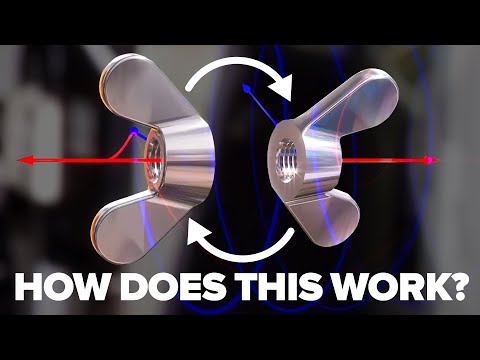
The Bizarre Behavior of Rotating Bodies
Veritasium explains the Dzhanibekov effect, also called the tennis racket theorem, where a spinning object flips unexpectedly about its intermediate axis.

DIY Scanning Electron Microscope - Overview
Ben Krasnow shows the first image from his home-built scanning electron microscope, after months of work, and walks through how the parts operate together.

The Snowflake Myth
Veritasium visits snowflake expert Dr Ken Libbrecht, who grows designer snowflakes in the lab.

Is 5G Spelling Our DOOM?! How EM Waves Can Hurt
ElectroBOOM examines whether 5G and other electromagnetic waves can harm people, explaining the EM spectrum and the difference between ionizing and non-ionizing radiation.

Dangerous tattoo remover from eBay is a MILLION watt laser
Styropyro tests an eBay laser tattoo removal device and finds it is a roughly million-watt pulsed laser, powerful enough to ignite air in the beam.

Air Conditioning isn't free... but we're close.
Tech Ingredients shows how to build a liquid panel with a specialty paint that, placed outside, cools below ambient air temperature.
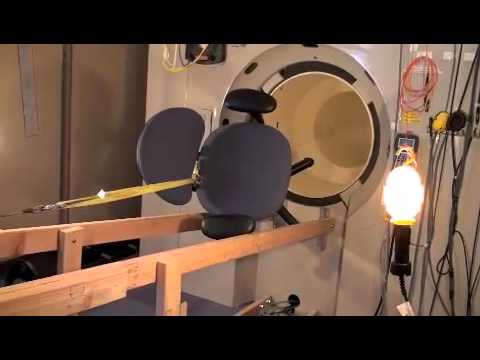
How dangerous are magnetic items near an MRI magnet?
A three-minute demonstration with a decommissioned 4 tesla MRI magnet showing how magnetic objects are pulled in and oscillate along the bore.

levitating frog
A short clip of a frog levitating inside a roughly 10 tesla magnetic coil, demonstrating diamagnetism.
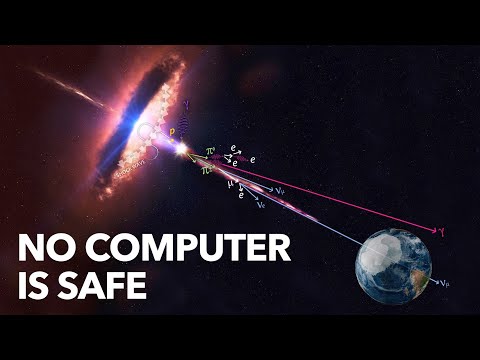
The Universe is Hostile to Computers
Veritasium explains how cosmic rays and other particles flip bits in computer memory, with examples including a Belgian election count error, plane incidents and game glitches.

Why is light slower in glass? - Sixty Symbols
Professor Mike Merrifield of Nottingham explains in a mostly uncut conversation why light travels slower in glass.

What if you swam in a nuclear storage pool?
Randall Munroe of xkcd answers what would happen if you swam in a spent nuclear fuel pool, and how much radiation you would receive at the surface versus at depth.
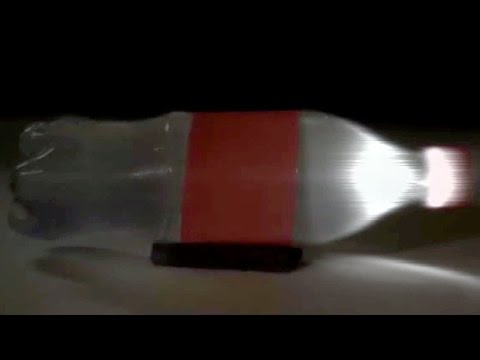
Visualizing video at the speed of light — one trillion frames per second
MIT Media Lab shows an imaging system capturing a trillion frames per second, fast enough to film light pulses travelling through objects in slow motion.

.38 Special vs Prince Ruperts Drop at 170,000 FPS - Smarter Every Day 169
Destin Sandlin of Smarter Every Day fires .22 Magnum and .38 Special bullets at Prince Rupert's drops, filmed at 170,000 frames per second.

The Original Double Slit Experiment
Veritasium revisits Thomas Young's original double slit experiment with light, showing how interference supports the wave nature of light.
How anti-theft tags work - magnetostriction
Applied Science explains how retail anti-theft tags work.

Can you fold paper more than 7 times with hydraulic press
The Hydraulic Press Channel folds an A3 sheet of paper past the supposed seven-fold limit and then crushes it with a press.

Laser diode self-mixing: Range-finding and sub-micron vibration measurement
Ben Krasnow of Applied Science shows that a plain laser diode can measure sub-micron vibrations from centimeters away using self-mixing interferometry, and can also be used for range-finding.