 PickVids
Best Information theory & signal processing Videos
The 43 Information theory & signal processing videos here were recommended by different people across different months. Choose by who it is for: 11 introductory, 12 intermediate, 17 for a general viewer, and 3 for someone who wants the harder derivation. Most of them are an explainer. What they share is that one picture or analogy is used to supply a missing concept. Channels you will keep seeing include 3Blue1Brown, Computerphile, Veritasium.
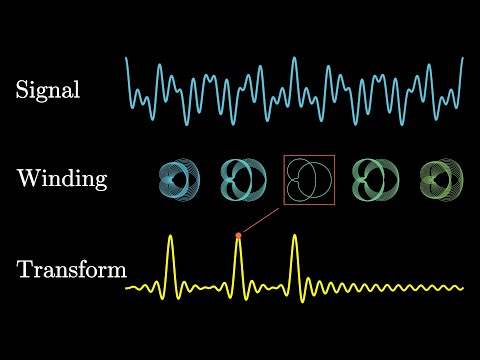
But what is the Fourier Transform? A visual introduction.
3Blue1Brown's animated visual introduction to the Fourier Transform, showing how a signal breaks into frequency components.

D/A and A/D | Digital Show and Tell (Monty Montgomery @ xiph.org)
Monty Montgomery of Xiph.org gives real-time demonstrations of sampling, quantization, bit depth and dither using real audio equipment, including both digital analysis tools and vintage analog bench gear.
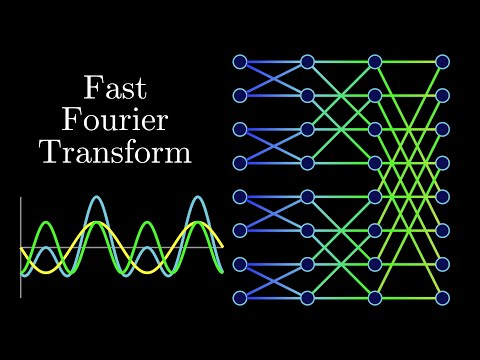
The Fast Fourier Transform (FFT): Most Ingenious Algorithm Ever?
Reducible's visual walkthrough of the Fast Fourier Transform, motivated by polynomial multiplication.

(1/4) Intro/History: Introducing a 100-year-old mechanical computer
The first of four short videos from Bill Hammack (engineerguy) introducing and giving the history of a 100-year-old mechanical computer, Michelson's harmonic analyzer.

David Kriesel: Traue keinem Scan, den du nicht selbst gefälscht hast
David Kriesel's 31C3 talk, in German, on the discovery that Xerox scanner-copiers silently replace digits and letters in scanned documents.

The more general uncertainty principle, regarding Fourier transforms
3Blue1Brown shows how the uncertainty principle arises from Fourier transforms.
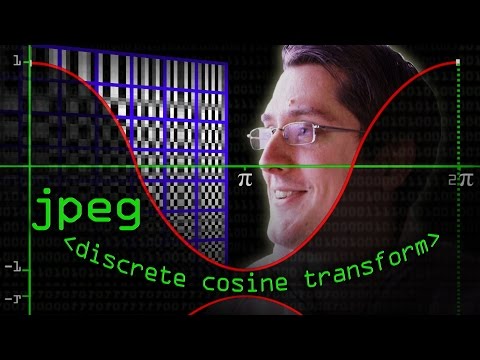
JPEG DCT, Discrete Cosine Transform (JPEG Pt2)- Computerphile
Mike Pound explains the discrete cosine transform and how it underpins JPEG compression.
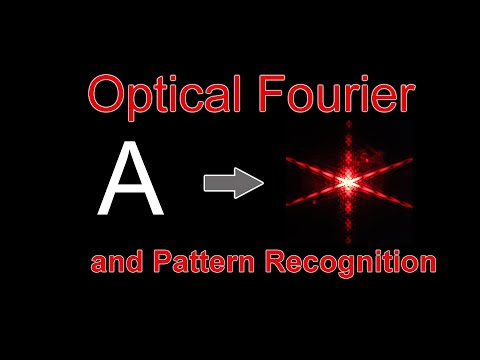
Fourier Optics used for Optical Pattern Recognition
Huygens Optics explains the Fourier transform and shows how a lens performs one optically.

Characters, Symbols and the Unicode Miracle - Computerphile
Tom Scott explains for Computerphile how Unicode and UTF-8 grew out of messy older character encodings to become the web's standard.
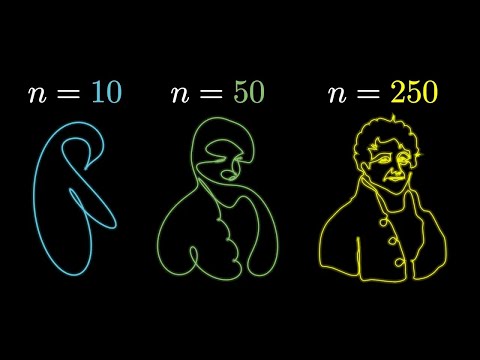
But what is a Fourier series? From heat flow to drawing with circles | DE4
3Blue1Brown introduces Fourier series, from the heat equation to drawing arbitrary shapes with rotating circles.

Dasher: information-efficient text entry
David MacKay's 2007 Google Tech Talk presents Dasher, a text-entry system driven by continuous gestures and a language model, reaching about 35 words per minute with one finger and 25 hands-free.

But what are Hamming codes? The origin of error correction
3Blue1Brown's discovery-oriented introduction to error correction codes, building up Hamming codes from the puzzle of locating a flipped bit.

The Most Underrated Algorithm
Veritasium tells the story of the Fast Fourier Transform, from its use in detecting nuclear tests to Cold War politics, and how it could have changed the arms race.

The Superheterodyne Radio: No really, that's its name
Technology Connections explains why the superheterodyne radio has its name and how mixing frequencies lets it tune stations well.
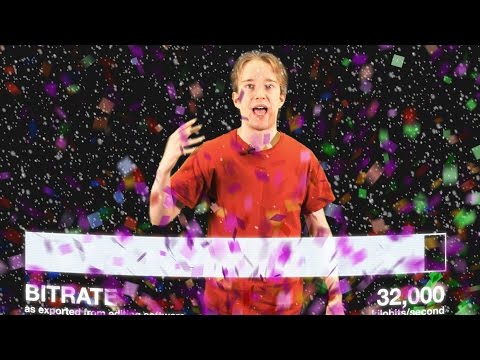
Why Snow and Confetti Ruin YouTube Video Quality
Tom Scott explains why confetti and snow wreck video quality, using interframe compression and bitrate.

The Loudness War
A two-minute demonstration of the loudness war, showing how heavy dynamic range compression in CD mastering makes music louder while degrading sound quality.

Lecture 1: Introduction to Information Theory
The first lecture of David MacKay's Cambridge course on information theory, pattern recognition and neural networks.

Ptolemy and Homer (Simpson)
A short animation reconstructing a planet's looping orbit using Ptolemy's epicycles and deferents, with the epicycles tracing out the face of Homer Simpson.

CppCon 2015: Timur Doumler “C++ in the Audio Industry”
Timur Doumler's CppCon 2015 talk on how C++ is used in the audio industry.

Justin Bieber 800% Slower
A Justin Bieber song slowed down 800% with the PaulStretch program, turning a pop track into a long ambient drone.

1.1 - Course outline
Course outline for Stanford's online GNSS course, introducing how GPS works and the many uses of satellite navigation.

Onslaught - Bad Apple 64 - C64 Demo
Onslaught's Bad Apple 64 is a Commodore 64 demo that streams over 2000 frames of the Bad Apple animation from a single disk side at 12fps, with each frame packed to around 70 bytes.
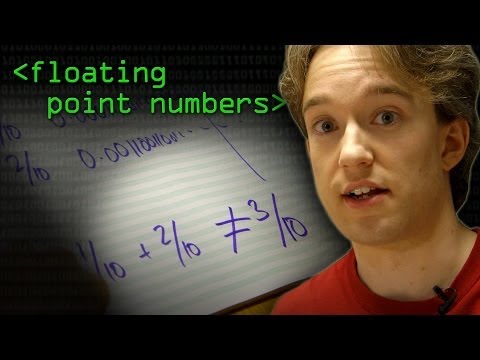
Floating Point Numbers - Computerphile
Tom Scott explains for Computerphile how floating point numbers work, why moving the binary point is fast, and why it handles money badly.

David Kriesel: Lies, damned lies and scans
David Kriesel's FrOSCon talk on how Xerox scancopiers, due to JBIG2 compression, silently replaced digits in scanned documents.