 PickVids
Best Music theory, synthesis & production Videos
The 103 Music theory, synthesis & production videos here were recommended by different people across different months. Choose by who it is for: 14 introductory, 14 intermediate, 74 for a general viewer, and 1 for someone who wants the harder derivation. Most of them are a demo. What they share is that you see the result first and only then decide whether to follow the detail. Channels you will keep seeing include Tantacrul, Adam Neely, Rick Beato.

Music Theory and White Supremacy
Adam Neely examines Phil Ewell's paper arguing Western music theory is framed by a white racial perspective.

Music Software & Bad Interface Design: Avid’s Sibelius
Tantacrul dissects the UX and UI of Avid's Sibelius music notation software, going through a long list of bad design choices.
Trackers: The Sound of 16-Bit
Ahoy's documentary traces tracker music from early Amiga software like SoundMonitor and Soundtracker through the demoscene, Protracker, and PC trackers such as Screamtracker and FastTracker.
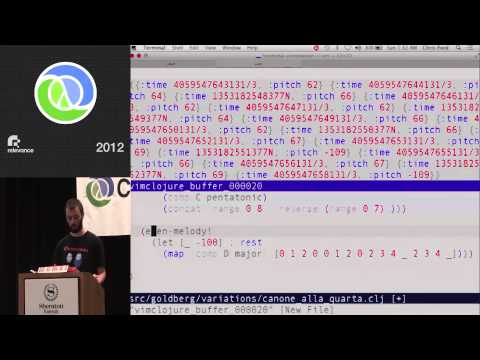
Functional Composition - Chris Ford
Chris Ford builds up from a single sine wave through layered abstractions to a Bach canon, using Clojure and the Overtone audio environment.

Intro to Synthesis Part 1 - The Building Blocks of Sound & Synthesis
Dean Friedman's near-hour-long introduction to synthesis, covering the building blocks of sound and the controls on a synthesizer.
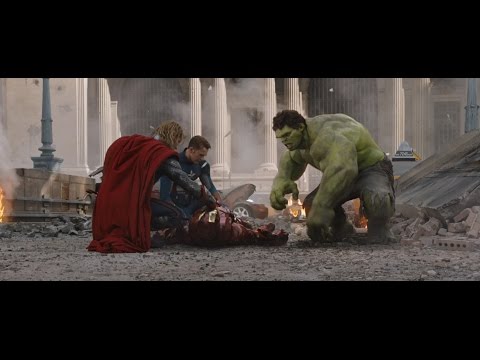
The Marvel Symphonic Universe
An Every Frame a Painting video essay asking why Marvel films lack memorable musical themes.

Notation Must Die: The Battle For How We Read Music
Tantacrul's 76-minute deep dive into the history of western music notation and the many proposed replacements, such as piano rolls, colored notes and the jubilate.
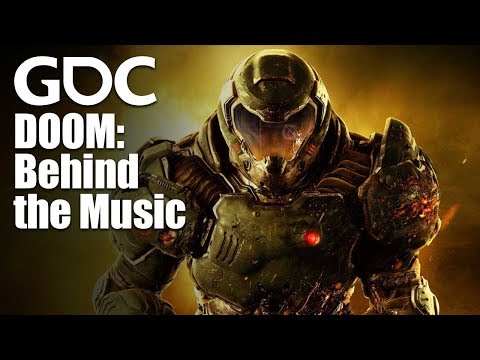
DOOM: Behind the Music
Mick Gordon's GDC 2017 session on composing the Doom (2016) soundtrack.

ORCA Sequencer Intro (Experimental Livecoding!)
Allieway Audio gives an informal introduction and live-coding demo of ORCA, a free esoteric programming environment for building procedural sequencers from Hundred Rabbits.

How I Designed a Free Music Font for 5 Million Musicians (MuseScore 3.6)
Tantacrul explains how he and engraver Simon Smith designed the free music notation font for MuseScore 3.6.

K Lars Lohn - Keynote - PyCon 2016
K Lars Lohn's PyCon 2016 keynote weaves together music theory, programming, biking road trips and fractals.

The Unanswered Question 1973 1 Musical Phonology Bernstein Norton
Leonard Bernstein's 1973 Norton Lectures at Harvard, starting with Musical Phonology.
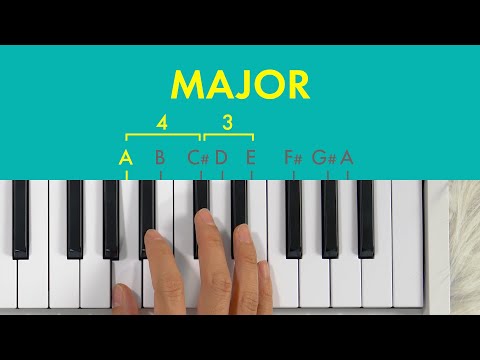
Learn music theory in half an hour.
Andrew Huang teaches the basics of music theory in about half an hour, covering intervals, chords and patterns.

The most feared song in jazz, explained
Vox Earworm explains why John Coltrane's Giant Steps is so hard to improvise over: it is fast and moves through three keys.

Making of "The Prodigy - Smack My Bitch Up" in Ableton by Jim Pavloff
Jim Pavloff rebuilds the Prodigy track Smack My Bitch Up in Ableton, identifying the samples used and recreating the track by hand.

Flying Dream
Gary Garrett's stop-motion animation of his song Flying Dream, with notes arranged on a lattice of fifths and major thirds.
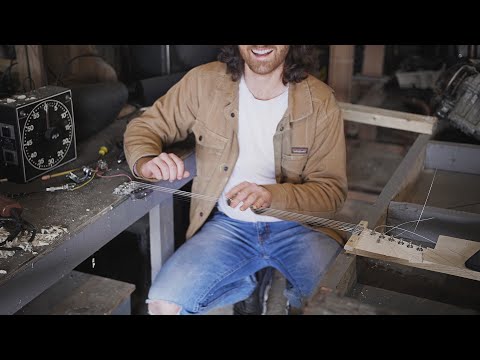
Tested: Where Does The Tone Come From In An Electric Guitar?
Guitarist Jim Lill methodically tests what in an electric guitar affects its tone, swapping parts on a partscaster and even trying a 2x4 body.

Music Software & Interface Design: MuseScore
Tantacrul gives a detailed UX and UI design review of the MuseScore 3 notation software and compares it with Sibelius.

Why Adults Can't Develop Perfect Pitch
Rick Beato argues that adults cannot develop true perfect pitch, which he ties to critical-period brain plasticity and language acquisition.

Bytebeat: Experimental music from very short C programs
Viznut demonstrates bytebeat, experimental music generated by extremely short C programs.

Why you DON'T want Perfect Pitch
Adam Neely explains what perfect (absolute) pitch is, how it differs from relative and quasi-absolute pitch, and why he would not want it.

Testing 432 Hz Frequencies (and temperaments)
Adam Neely tests the claims for tuning to A=432 Hz by trying the unusual tuning systems that its proponents' numerology requires.

Music as a Language: Victor Wooten at TEDxGabriolaIsland
Bassist Victor Wooten argues that music should be learned the way children learn their first language: by immersion and play, without early correction or rigid academic instruction.

Gaslighting Your Fans w/ Dolby ATMOS™
Musician and audio engineer Benn Jordan tries Dolby Atmos as a consumer, covering the theory of immersive audio, its business model, and home theater and headphone listening.