 PickVids
Best Chemistry Videos
「Chemistry」下面有56部被不同的人、在不同月份推荐过的视频。挑的时候先看对象:入门0部,适合还没学过的人;进阶12部,适合已经懂术语的人;普通向42部,按兴趣就能看;更硬的2部,留给想看推导或细节的人。这一类数量最多的是演示,所以它们的共同点是先看到做成了什么,再决定要不要追细节。常出现的频道包括Applied Science、Veritasium、NileRed。目录给这个主题划的范围是:Chemistry: reactions, organic chemistry, explosives, periodic table, home chemistry experiments, NileRed, polymers, chemical engineering, lab techniques, chemistry history.如果只看三部,就从《Clasp: Common Lisp using LLVM and C++ for Molecular Metaprogramming》开始,它负责把问题讲出画面;然后看《Richard Feynman Fire》,换一种讲法或例子;最后看《I messed up. You're using too much detergent.》,留给已经有基础的人。页面按每页24部切开,顺序看的是被推荐跨越了多少个月,不是播放量。每条标题下面那一句是这部片子自己的内容说明,用来区分它在讲定义、过程、演示还是观点。点进去能看到推荐原话、原文链接和适合谁看。看的时候把强烈推荐当成有人明确叫你去看,把引用当成只是拿来举例,把批评留下来对照,不要把每条评论都当成同一力度。

Clasp: Common Lisp using LLVM and C++ for Molecular Metaprogramming
Christian Schafmeister's Google Tech Talk on designing spiroligomer molecules and building Clasp, a Common Lisp on LLVM that interoperates with C++, to program molecular design.

Richard Feynman Fire
A short clip from a Richard Feynman interview in which he explains fire, describing how burning wood releases sunlight stored by the tree, which built itself mostly from air.

I messed up. You're using too much detergent.
Technology Connections explains dishwasher detergent use, arguing people use too much and that powder beats pods and gels.
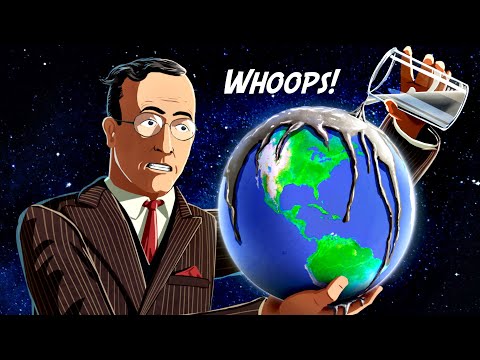
The Man Who Accidentally Killed The Most People In History
Veritasium tells the story of Thomas Midgley Jr., who introduced leaded gasoline and CFCs, and covers the science behind lead exposure and ozone damage.
Introduction: The Chemical History of a Candle by Michael Faraday (1/6)
Bill Hammack of engineerguy introduces his series on Michael Faraday's lectures on The Chemical History of a Candle.

Revolutionary Paint: How to Make Surfaces Stay Cool in the Sun
Tech Ingredients shows how to make a homemade radiative cooling paint, with a custom liquid panel that cools below ambient temperature outdoors.

How Do Nuclear Submarines Make Oxygen?- Smarter Every Day 251
A Smarter Every Day episode from aboard a nuclear submarine on how the crew makes breathable air.

Making Infrared Cooling Paint From Grocery Store Items (w/Novel CaCO₃ Microsphere Synthesis)
NightHawkInLight shows how to make radiative sky cooling paint from grocery and hardware store materials, including a novel calcium carbonate microsphere synthesis.

How To Make Infrared Cooling Paint (Electricity Free Air Conditioning)
NightHawkInLight shows how to make ultra-white radiative paint that cools surfaces below ambient temperature without electricity.

PFAS: Last Week Tonight with John Oliver (HBO)
John Oliver's Last Week Tonight segment on PFAS, the 'forever chemicals' linked to health problems.

Why Hershey bars taste like vomit (and I love them)
Adam Ragusea explores why Hershey's chocolate tastes the way it does to many non-Americans, tracing it to butyric acid and Hershey's history, and why familiarity makes Americans love it.

The Biggest Chemical Coverup In History
Veritasium investigates PFAS forever chemicals, from Teflon's history to pollution of the global water system and their presence in the US population.

Lee Cronin: Origin of Life, Aliens, Complexity, and Consciousness | Lex Fridman Podcast #269
Lex Fridman interviews University of Glasgow chemist Lee Cronin about the origin of life, aliens, complexity and consciousness.

Clasp: Common Lisp using LLVM and C++ for Designing Molecules
Christian Schafmeister's Google Tech Talk on Clasp and CANDO, a Common Lisp implementation on LLVM and C++ used to design molecules, including energy minimization and force-field calculations.

America's Nerve Gas Arsenal
A 1973 NBC News documentary on the US nerve gas arsenal, covering leaks in Okinawa, a Utah test that killed thousands of sheep, and the long-term hazards of storage sites.

How Does Kodak Make Film? (Kodak Factory Tour Part 1 of 3) - Smarter Every Day 271
Destin Sandlin of Smarter Every Day tours a Kodak factory to show how photographic film is manufactured.

Homochirality: Why Nature Never Makes Mirror Molecules
Steve Mould explains homochirality: why biological molecules like sugars and amino acids come in only one handedness.
The 5 Most Dangerous Chemicals on Earth
A SciShow episode in which Hank Green introduces five of the most dangerous chemicals, from lethal toxins to substances that explode on contact.
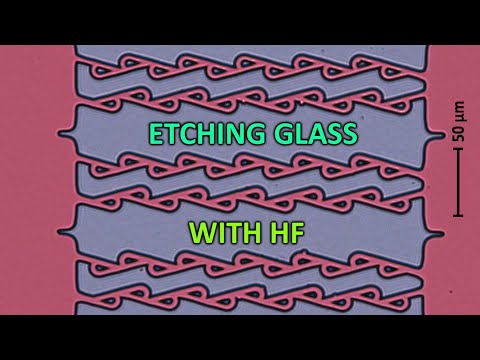
Etching small patterns in Glass
Huygens Optics experiments with etching tiny patterns in glass, covering hydrofluoric acid risks, buffered oxide etch, photoresist and chromium masks, and laser-induced etching.

DIY mass spectrometer measures potassium in dietary salt substitute
Ben Krasnow of Applied Science builds and operates a simple mass spectrometer, using it to measure potassium isotopes in a salt substitute.
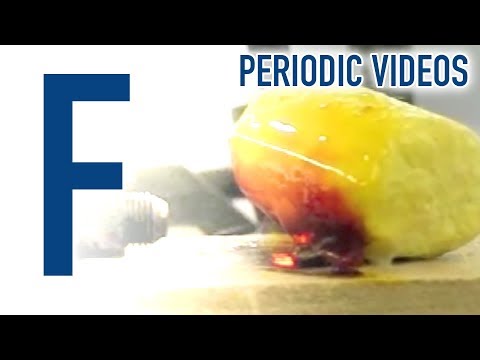
Fluorine - Periodic Table of Videos
Periodic Videos visits a fluorine expert to show how reactive the element is in action.

James Tour: The Mystery of the Origin of Life
Synthetic organic chemist James Tour gives a lecture arguing that origin-of-life research is far from explaining how life began.
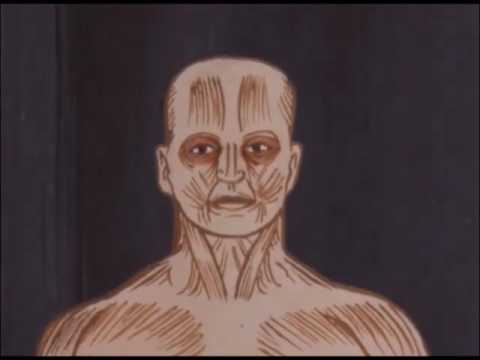
Toxic Propellant Hazards In Rocketry 1966 NASA
A 1966 NASA safety film teaching workers how to handle toxic rocket propellants such as hydrazine and nitrogen tetroxide.

Glass engineering - designing and making photochromic glass
Ben Krasnow of Applied Science shows how to make small batches of specialty glass with minimal equipment, including designing and making photochromic glass.