 PickVids
Best Cosmology & astrophysics Videos
「Cosmology & astrophysics」下面有108部被不同的人、在不同月份推荐过的视频。挑的时候先看对象:入门10部,适合还没学过的人;进阶8部,适合已经懂术语的人;普通向88部,按兴趣就能看;更硬的2部,留给想看推导或细节的人。这一类数量最多的是讲解,所以它们的共同点是用一个图像或类比把一个概念补上。常出现的频道包括PBS Space Time、Kurzgesagt – In a Nutshell、Isaac Arthur。目录给这个主题划的范围是:Cosmology and astrophysics: black holes, dark matter, dark energy, Big Bang, galaxies, stars, gravitational waves, exoplanets, the observable universe, Sabine Hossenfelder, Kurzgesagt.如果只看三部,就从《TIMELAPSE OF THE FUTURE: A Journey to the End of Time (4K)》开始,它负责把问题讲出画面;然后看《The Solar Gravitational Lens will Map Exoplanets. Seriously.》,换一种讲法或例子;最后看《Powers of Ten™ (1977)》,留给已经有基础的人。页面按每页24部切开,顺序看的是被推荐跨越了多少个月,不是播放量。每条标题下面那一句是这部片子自己的内容说明,用来区分它在讲定义、过程、演示还是观点。点进去能看到推荐原话、原文链接和适合谁看。看的时候把强烈推荐当成有人明确叫你去看,把引用当成只是拿来举例,把批评留下来对照,不要把每条评论都当成同一力度。
TRUE Limits Of Humanity – The Final Border We Will Never Cross
Kurzgesagt explains why, even with science-fiction technology, most of the universe is permanently out of reach because of cosmic expansion and finite resources.

What would we see if we fell into a Black Hole?
ScienceClic visualizes what you would see falling into a black hole, from the approach and the accretion disc to crossing the horizon, in 15 minutes.

Something Deeply Hidden | Sean Carroll | Talks at Google
Sean Carroll's Talks at Google presentation of his book Something Deeply Hidden.

Did Time Start at the Big Bang?
A PBS Space Time episode asking whether time began at the Big Bang.

Does Time Cause Gravity?
PBS Space Time explores whether time causes gravity, explaining that gravity does not truly warp the flow of time but arises from time gradients.

von Neumann probes, Dyson spheres, exploratory engineering and the Fermi paradox
Stuart Armstrong of the Future of Humanity Institute gives an Oxford physics talk on what exploratory engineering suggests about the Fermi paradox.
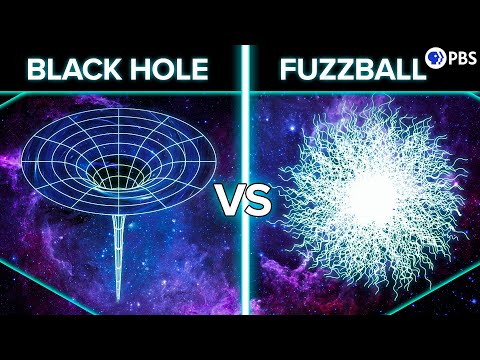
Are Black Holes Actually Fuzzballs?
A PBS Space Time episode on fuzzballs, the string-theory proposal for black holes that replaces the singularity with a tangle of strings.

How to Detect Extra Dimensions
A PBS Space Time episode on how gravitational wave observations of a neutron star merger, GW170817, can limit the number of spacetime dimensions.
What If Alien Life Were Silicon-Based?
PBS Space Time considers whether life could be based on silicon instead of carbon, comparing the two elements' chemistry and why silicon is the most plausible alternative.

These are the asteroids to worry about
A Veritasium video on the asteroid threat, with UCLA's Dave Jewitt explaining detection efforts and how different asteroid sizes compare in damage.

This Black Hole Could be Bigger Than The Universe
Kurzgesagt explores the idea that black holes could create universes and that we might live inside one.

Matrioshka Brains: Star-Powered Computers
Isaac Arthur explains the Matrioshka Brain, a hypothetical computer or artificial mind powered by an entire star using nested shells.

Dyson Spheres
Isaac Arthur examines Dyson spheres and swarms, including common myths and misconceptions.

Ancient Life as Old as the Universe
Kurzgesagt explores the idea that life might have arisen shortly after the Big Bang, when the whole universe was warm enough to be habitable.

Are There Lost Alien Civilizations in Our Past?
Kurzgesagt asks whether advanced civilizations could have existed on Earth in the deep past and left little evidence.
The Pope's Astronomer - Sixty Symbols
Brady Haran interviews Brother Guy Consolmagno, director of the Vatican Observatory, for Sixty Symbols.

JWST just made the "Crisis in Cosmology" WORSE
Astrophysicist Dr.
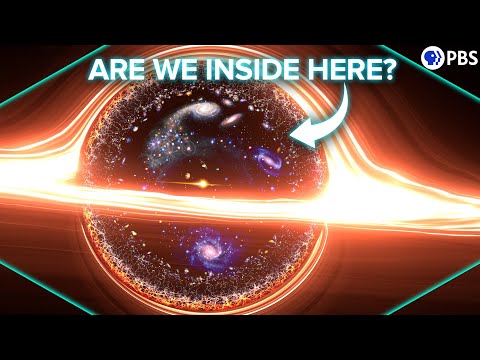
Could The Universe Be Inside A Black Hole?
A PBS Space Time episode asking whether our universe could sit inside a black hole.
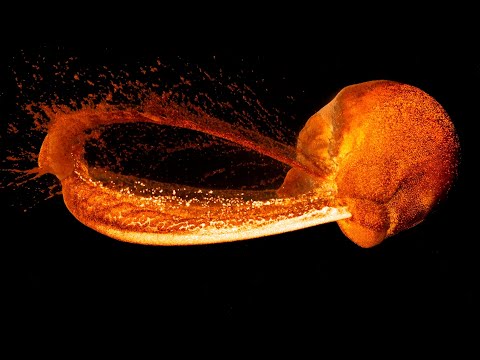
New Supercomputer Simulation Sheds Light on Moon’s Origin
A NASA and Durham University supercomputer simulation suggesting the Moon may have formed within hours of a giant impact between Earth and a Mars-sized body.

Peter Mulvey Performs Vlad the Astrophysicist
Folk musician Peter Mulvey performs Vlad the Astrophysicist, a spoken-word style song that touches on why civilizations may never meet across space and time.
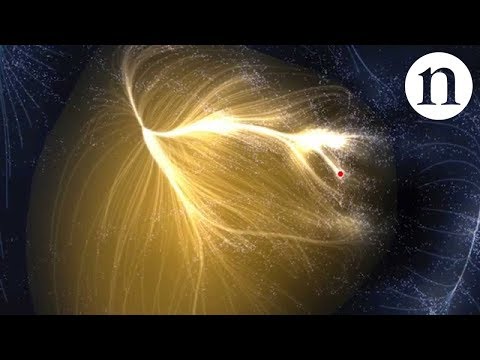
Laniakea: Our home supercluster
A short Nature video on the discovery that our home supercluster is Laniakea, redefined by mapping the flow of galaxies rather than their density.
How to Win an Interstellar War
A Kurzgesagt video exploring how advanced civilizations might wage war across light years.

What if Humans Are NOT Earth's First Civilization? | Silurian Hypothesis
PBS Space Time examines the Silurian hypothesis, the idea that an industrial civilization could have existed on Earth before humans.

To Scale: THE SOLAR SYSTEM
A short film in which friends build the first true-to-scale model of the solar system, with full planetary orbits, on a Nevada dry lakebed.