 PickVids
Best Cosmology & astrophysics Videos
「Cosmology & astrophysics」下面有108部被不同的人、在不同月份推荐过的视频。挑的时候先看对象:入门10部,适合还没学过的人;进阶8部,适合已经懂术语的人;普通向88部,按兴趣就能看;更硬的2部,留给想看推导或细节的人。这一类数量最多的是讲解,所以它们的共同点是用一个图像或类比把一个概念补上。常出现的频道包括PBS Space Time、Kurzgesagt – In a Nutshell、Isaac Arthur。目录给这个主题划的范围是:Cosmology and astrophysics: black holes, dark matter, dark energy, Big Bang, galaxies, stars, gravitational waves, exoplanets, the observable universe, Sabine Hossenfelder, Kurzgesagt.如果只看三部,就从《TIMELAPSE OF THE FUTURE: A Journey to the End of Time (4K)》开始,它负责把问题讲出画面;然后看《The Solar Gravitational Lens will Map Exoplanets. Seriously.》,换一种讲法或例子;最后看《Powers of Ten™ (1977)》,留给已经有基础的人。页面按每页24部切开,顺序看的是被推荐跨越了多少个月,不是播放量。每条标题下面那一句是这部片子自己的内容说明,用来区分它在讲定义、过程、演示还是观点。点进去能看到推荐原话、原文链接和适合谁看。看的时候把强烈推荐当成有人明确叫你去看,把引用当成只是拿来举例,把批评留下来对照,不要把每条评论都当成同一力度。

The Maths of General Relativity (1/8) - Spacetime and Worldlines
The first of an eight-part ScienceClic series building general relativity, covering worldlines, proper time and coordinate systems with animated visualizations.

Terence Tao: The Cosmic Distance Ladder, UCLA
Terence Tao's AMS Einstein Public Lecture at UCLA on the cosmic distance ladder, the chain of methods astronomers use to measure distances from the Earth to distant galaxies.

Fermi Paradox: The Dyson Dilemma v2.0
Isaac Arthur examines the Dyson Dilemma, the puzzle of why we see no Dyson spheres or megastructures if growth-oriented civilizations should build them.

Stanford Professor Andrei Linde celebrates physics breakthrough
A short Stanford video in which Chao-Lin Kuo surprises Professor Andrei Linde with BICEP2 evidence supporting cosmic inflation, the first apparent images of primordial gravitational waves.

The Absurdity of Detecting Gravitational Waves
Veritasium explains in detail how LIGO detects gravitational waves, with a laser interferometer measuring displacements smaller than a proton.

Why is Time a One-Way Street?
Leonard Susskind's Santa Fe Institute talk on the arrow of time: why the past differs from the future when physics equations are time-symmetric.

The Hubble Ultra Deep Field in 3D
A short video built around an animation of the roughly 10,000 galaxies in the Hubble Ultra Deep Field, placed at their measured redshift distances.

Avi Loeb: Aliens, Black Holes, and the Mystery of the Oumuamua | Lex Fridman Podcast #154
Lex Fridman interviews Harvard astrophysicist Avi Loeb about the interstellar object Oumuamua, aliens and black holes.
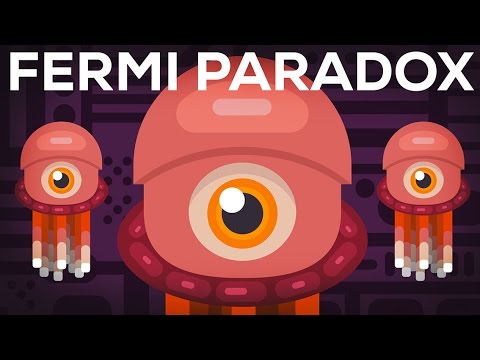
The Fermi Paradox — Where Are All The Aliens? (1/2)
Kurzgesagt introduces the Fermi paradox: with so many stars and planets, why do we see no sign of aliens?

The Geometry of Causality
PBS Space Time explains how spacetime geometry and light cones determine the order of events and what can cause what.

Dark Matter: The Situation has Changed
Sabine Hossenfelder explains how her opinion on dark matter has shifted, weighing the evidence for and against it and the case for modified gravity.

I Think Faster Than Light Travel is Possible. Here's Why.
Sabine Hossenfelder explains why she thinks faster-than-light travel may not be ruled out.

The Black Hole Information Paradox
PBS Space Time episode on the black hole information paradox, covering how black holes seem to destroy information, the no-hair conjecture and the proposed role of the event horizon.

Tiny meteorites are everywhere. Here’s how to find them.
Verge Science's pilot of its Trial & Error series follows amateur scientist Jon Larsen on a hunt for micrometeorites.

Sir Roger Penrose & William Lane Craig • The Universe: How did it get here & why are we part of it?
Physicist Roger Penrose and philosopher William Lane Craig discuss the origin of the universe on the Unbelievable?
Why Quantum Information is Never Destroyed
A PBS Space Time episode asking whether the universe's information can ever truly be lost, tying quantum mechanics, determinism and black holes together.

Superluminal Time Travel + Time Warp Challenge Answer
A PBS Space Time episode explaining why faster-than-light travel is equivalent to travelling back in time, using relativity and Minkowski diagrams for different observers.
What Happens After the Universe Ends?
PBS Space Time explains Roger Penrose's conformal cyclic cosmology, in which the far future of our universe becomes the big bang of the next.

The Case for String Theory - Sixty Symbols
Sixty Symbols interviews Nottingham cosmologist Tony Padilla, who says string theory deserves to be taken seriously.

Black Hole Star – The Star That Shouldn't Exist
Kurzgesagt explains black hole stars, a hypothesized kind of giant star with a black hole at its core that could be a route to early supermassive black holes.

We all move at the Speed of Light
ScienceClic explains why nothing can go faster than light by treating motion through space and time together, so everything moves at the speed of light through spacetime.

Humanity was born way ahead of its time. The reason is grabby aliens.
Rational Animations explains Robin Hanson's grabby aliens model, which argues that humanity looks suspiciously early in cosmic history.
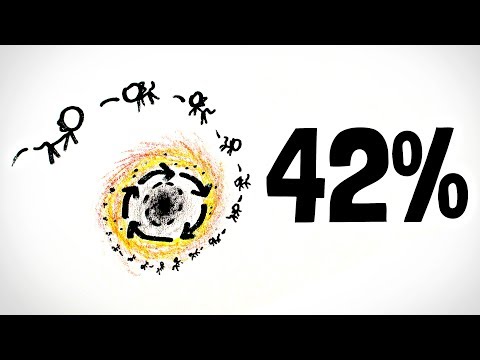
The Unreasonable Efficiency of Black Holes
Minutephysics compares how efficiently different processes convert mass to energy per E=mc^2, from fire and fission to fusion, antimatter and black holes, which can convert a large fraction of mass to energy.

The Black Hole Bomb and Black Hole Civilizations
Kurzgesagt explains the black hole bomb and how far-future civilizations might extract energy from spinning black holes, including Dyson-sphere-style ideas.