 PickVids
Best History of computing Videos
「History of computing」下面有231部被不同的人、在不同月份推荐过的视频。挑的时候先看对象:入门6部,适合还没学过的人;进阶50部,适合已经懂术语的人;普通向173部,按兴趣就能看;更硬的2部,留给想看推导或细节的人。这一类数量最多的是演示,所以它们的共同点是先看到做成了什么,再决定要不要追细节。常出现的频道包括Computer History Museum、TheTedNelson、CuriousMarc。目录给这个主题划的范围是:Computing history: early computers, mainframes, Bletchley Park, ENIAC, Xerox PARC, Unix history, minicomputers, personal computer revolution, historical lectures and museum restorations.如果只看三部,就从《AT&T Archives: Similiarities of Wave Behavior (Bonus Edition)》开始,它负责把问题讲出画面;然后看《Micro Men - 720p (2009)》,换一种讲法或例子;最后看《Light Years Ahead | The 1969 Apollo Guidance Computer》,留给已经有基础的人。页面按每页24部切开,顺序看的是被推荐跨越了多少个月,不是播放量。每条标题下面那一句是这部片子自己的内容说明,用来区分它在讲定义、过程、演示还是观点。点进去能看到推荐原话、原文链接和适合谁看。看的时候把强烈推荐当成有人明确叫你去看,把引用当成只是拿来举例,把批评留下来对照,不要把每条评论都当成同一力度。

The IBM 1401 compiles and runs FORTRAN II
CuriousMarc and colleagues at the Computer History Museum try to compile and run a FORTRAN II program on a 1959 IBM 1401.

Chain of Fools : Upgrading through every version of windows (HQ)
TheRasteri installs MS-DOS and Windows 1.0, then upgrades in place through nearly every Windows version up to Windows 7, checking which programs survive.

Hold music used to sound better. Here's why.
Tom Scott explains why hold music sounds worse than it used to, tracing it to old telephone exchanges and the audio compression applied by modern switches.

Micro Men - 10th Anniversary - With Chris Curry, Steve Furber and Hermann Hauser
The Centre for Computing History reunites Chris Curry, Steve Furber and Hermann Hauser to rewatch the BBC drama Micro Men on its tenth anniversary.

Megaprocessor Tour 1 - (fixed audio)
A short tour of the Megaprocessor, a microprocessor built at enormous scale from tens of thousands of discrete transistors.

Steve Jobs rare footage conducting a presentation on 1980 (Insanely Great)
Rare footage of Steve Jobs giving a 22 minute presentation about Apple in 1980, donated to the Computer History Museum.

Douglas Adams - Hyperland
Hyperland is a 1990 BBC documentary written by and starring Douglas Adams, who tours an imagined future of hypertext and software agents.

An astonishing old calculator - Numberphile
Cliff Stoll shows and explains his two Friden EC-132 electronic calculators for Numberphile.

Alternate Reality Kit by Randall Smith at Xerox PARC 1986 (VPRI-0131)
A 12-minute demo of the Alternate Reality Kit, built by Randall Smith at Xerox PARC in 1986.
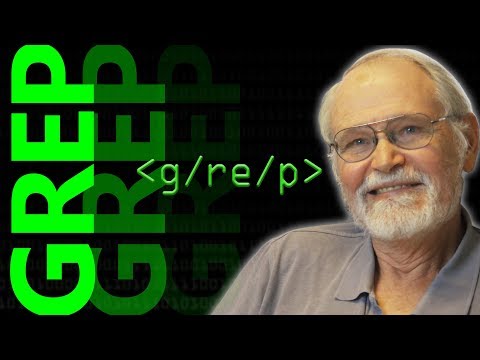
Where GREP Came From - Computerphile
Brian Kernighan explains how grep came to be, written overnight by Ken Thompson, and how it got its name from the ed command g/re/p.

The CED: RCA's Very Late, Very Weird Video Gamble (Pt. 1)
Technology Connections gives a deeply researched history of RCA's CED video disc system, a capacitance-based format that took over a decade to reach market.

Ted Nelson struggles with uncomprehending radio interviewer, 1979
A 1979 CBC radio interview in which Ted Nelson tries to explain how computers could serve as tools for thinking and visualizing.

The Computer Revolution Hasn't Happened Yet OOPSLA 97 Keynote (VPRI 0719)
Alan Kay's 1997 OOPSLA keynote argues that the computer revolution has not really happened yet, reflecting on how computing, objects and the web fall short of their potential.

Oral History of John Backus
Grady Booch interviews John Backus, who led the IBM team that created FORTRAN in 1957, for the Computer History Museum in 2006.

Seymour Cray's Only Surviving Talk: "Cray-1 Introduction" (1976, LANL)
Seymour Cray's only surviving recorded talk, introducing the Cray-1 supercomputer in 1976.

Amiga Story | Nostalgia Nerd
Part 1 of a documentary on the Commodore Amiga, from the Lorraine prototype and the Atari and Commodore buyouts through the Amiga 1000 launch in the 1980s.

AT&T Archives: The Step-By-Step Switch
A 1951 Bell System training film showing how telephone calls are routed through a step-by-step (Strowger) switching office.

Ted Nelson's Eulogy for Douglas Engelbart
Ted Nelson's short eulogy for Douglas Engelbart, delivered at the Computer History Museum in 2013, reflecting on his friend and Engelbart's ideas.

Amiga Boing Ball
The original Amiga Boing Ball demo, written at the Winter CES in January 1984 to show off the Amiga's hardware, with a bouncing, spinning checkered ball running while the system multitasked.
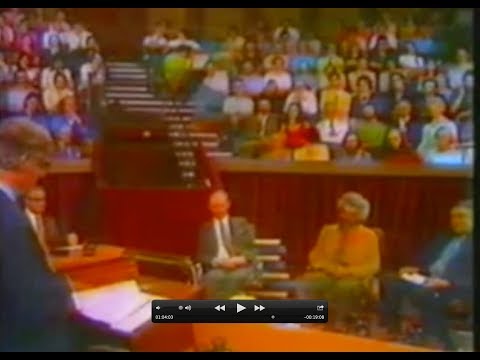
The Lighthill debate on Artificial Intelligence: "The general purpose robot is a mirage"
The full 1973 BBC Lighthill debate on artificial intelligence, featuring James Lighthill, Donald Michie, Richard Gregory and John McCarthy.

Grace Hopper on Letterman
Grace Hopper appears on Letterman and uses a foot-long piece of wire to show how far light travels in a nanosecond.
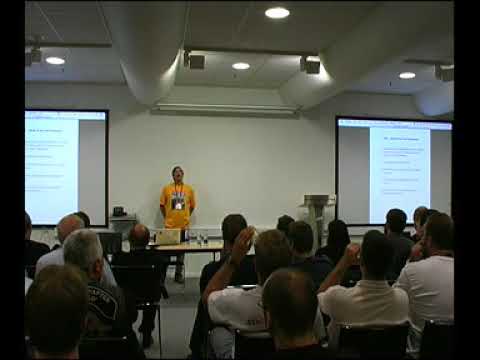
A Brief History of the BSD Fast Filesystem by Marshall Kirk McKusick
Marshall Kirk McKusick gives a talk at EuroBSDCon tracing filesystem and storage development from 1979 to today, using the BSD Fast Filesystem as the focus.

Steve Jobs Introduces the Macintosh
Recording of the January 1984 Boston Computer Society meeting where Steve Jobs unveiled the Macintosh.

Alto System Project: Larry Tesler demonstration of Gypsy
Archival footage of Larry Tesler demonstrating Gypsy, the modeless text editor he and Tim Mott built at Xerox PARC, running on the Computer History Museum's restored Alto.