 PickVids
Best Semiconductors & chip manufacturing Videos
「Semiconductors & chip manufacturing」下面有47部被不同的人、在不同月份推荐过的视频。挑的时候先看对象:入门1部,适合还没学过的人;进阶21部,适合已经懂术语的人;普通向21部,按兴趣就能看;更硬的4部,留给想看推导或细节的人。这一类数量最多的是演讲,所以它们的共同点是一位讲者把一个判断讲完,例子是为了撑住这个判断。常出现的频道包括Asianometry、Branch Education、Jeri Ellsworth。目录给这个主题划的范围是:Semiconductors: chip fabrication, lithography, ASML, TSMC, transistors, FPGAs, ASIC design, diodes and LEDs, solar cells, how chips are made.如果只看三部,就从《Indistinguishable From Magic: Manufacturing Modern Computer Chips》开始,它负责把问题讲出画面;然后看《The Extreme Engineering of ASML’s EUV Light Source》,换一种讲法或例子;最后看《Jim Keller: Moore's Law, Microprocessors, and First Principles | Lex Fridman Podcast #70》,留给已经有基础的人。页面按每页24部切开,顺序看的是被推荐跨越了多少个月,不是播放量。每条标题下面那一句是这部片子自己的内容说明,用来区分它在讲定义、过程、演示还是观点。点进去能看到推荐原话、原文链接和适合谁看。看的时候把强烈推荐当成有人明确叫你去看,把引用当成只是拿来举例,把批评留下来对照,不要把每条评论都当成同一力度。

Indistinguishable From Magic: Manufacturing Modern Computer Chips
A HOPE09 talk on how modern computer chips are manufactured, from 22nm transistors to ultra-clean fabs and the tricks used to pattern tiny features with light.
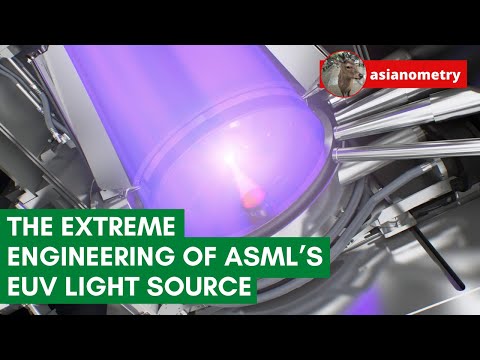
The Extreme Engineering of ASML’s EUV Light Source
Asianometry explains the EUV light source inside ASML's lithography machines, where lasers hit falling tin droplets twice to produce 13.5 nm light.

Jim Keller: Moore's Law, Microprocessors, and First Principles | Lex Fridman Podcast #70
Lex Fridman interviews legendary chip architect Jim Keller about Moore's Law, microprocessor design, and first-principles thinking.

Jim Keller: Moore’s Law is Not Dead
Jim Keller gives a UC Berkeley EECS colloquium arguing that Moore's Law is not dead.
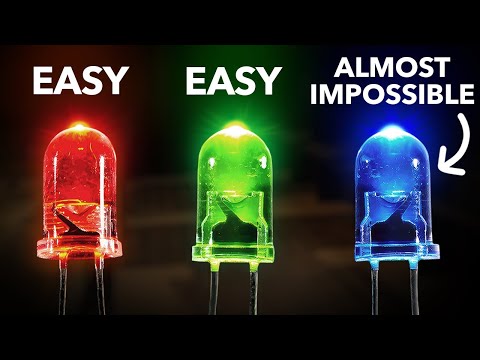
Why It Was Almost Impossible to Make the Blue LED
Veritasium tells the story of how Shuji Nakamura and others made the blue LED, long thought nearly impossible.
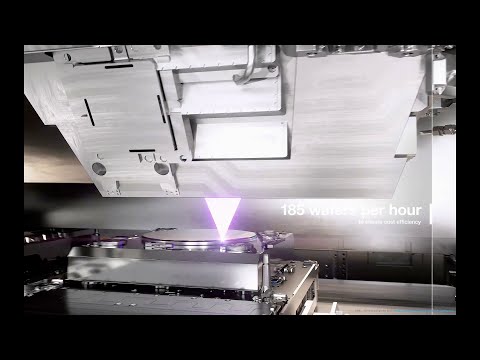
38C3 - From Silicon to Sovereignty: How Advanced Chips are Redefining Global Dominance
A 38C3 talk on how advanced chips are made, centered on EUV lithography and the global supply chain behind it.

The man who almost faked his way to a Nobel Prize
BobbyBroccoli's first of three parts on Jan Hendrik Schon, the Bell Labs postdoc whose fabricated organic semiconductor results nearly won a Nobel Prize.

AWS re:Invent 2016: Tuesday Night Live with James Hamilton
James Hamilton's Tuesday Night Live keynote at AWS re:Invent 2016, touring AWS infrastructure at scale including networking, power and custom silicon.
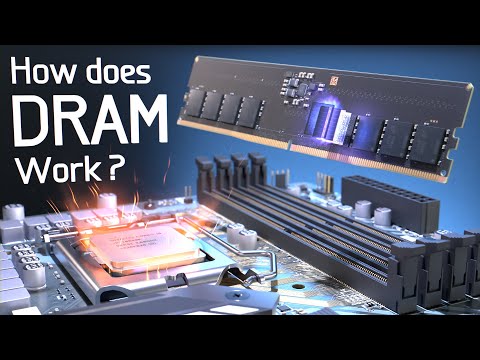
How does Computer Memory Work? 💻🛠
A 36-minute animated deep dive from Branch Education into how DRAM works.

"Z2" - Upgraded Homemade Silicon Chips
Sam Zeloof shows the upgraded second iteration of his homemade silicon integrated circuit fabrication process, producing chips with around a thousand transistors in his garage.
The Extreme Physics Pushing Moore’s Law to the Next Level
Seeker's Focal Point short documentary on ASML's extreme ultraviolet lithography machines, which make the most advanced chips.

Building a 6800 CPU on an FPGA with nMigen (part 1)
The first part of Robert Baruch's series on building a 6800 CPU on an FPGA with nMigen, a Python-based hardware description language.

The $200M Machine that Prints Microchips: The EUV Photolithography System
Branch Education's animated deep dive into ASML's EUV photolithography machine and how it prints nanometer-scale transistors onto chips.

How a transistor works
Ben Eater gives a detailed look at how an NPN bipolar junction transistor works and what it does.

36C3 - Open Source is Insufficient to Solve Trust Problems in Hardware
A 36C3 talk by Bunnie Huang arguing that open source is necessary but not sufficient for trustworthy hardware, because verifying hardware is destructive and so creates a time-of-check/time-of-use gap.

Defcon 21 - Decapping Chips The Strike Easy Hard Way
A DEF CON 21 talk by Adam Laurie and Zac Franken on decapping chips, covering how to remove chip packaging and image the die to read out contents such as ROM.

[7] Jim Keller, Silicon Wizard 🧙♂️
Ian Cutress interviews chip architect Jim Keller about his time at AMD, Intel and elsewhere, management advice, design approach, Moore's Law and x86 versus Arm.

The Closest Thing We Have to Alien Technology
Veritasium explains how ASML's EUV lithography machines make the most advanced computer chips, covering the engineering of the light source, mirrors and the supply chain around them.

27c3: Reverse Engineering the MOS 6502 CPU (en)
Michael Steil's 27c3 talk on reverse engineering the MOS 6502 from die shots into a transistor-level simulation, as in the Visual6502 project.
Why The World Relies On ASML For Machines That Print Chips
CNBC gets a tour of ASML's cleanrooms in the Netherlands to see how its roughly $200 million EUV lithography machines are built.

Morris Chang, in conversation with Jen-Hsun Huang
A 2007 Computer History Museum conversation in which Nvidia CEO Jen-Hsun Huang interviews TSMC founder Morris Chang.
Etching small patterns in Glass
Huygens Optics experiments with etching tiny patterns in glass, covering hydrofluoric acid risks, buffered oxide etch, photoresist and chromium masks, and laser-induced etching.

Birth of The Transistor: A video history of Japan's electronic industry. (Part 1)
First part of a four-part video history of Japan's electronics industry, covering the birth of the transistor and the rise of Japanese semiconductors.

Homebrew NMOS Transistor Step by Step - So Easy Even Jeri Can Do It
Jeri Ellsworth shows step by step how to make an NMOS transistor at home using a kiln, rust remover, spin-on dopant, eBay wafers and vinyl stickers.