 PickVids
Best University lectures & courses Videos
「University lectures & courses」下面有127部被不同的人、在不同月份推荐过的视频。挑的时候先看对象:入门48部,适合还没学过的人;进阶39部,适合已经懂术语的人;普通向32部,按兴趣就能看;更硬的8部,留给想看推导或细节的人。这一类数量最多的是课堂讲座,所以它们的共同点是用上课的节奏把一条推导走完,而不是只丢结论。常出现的频道包括MIT OpenCourseWare、Stanford、Jordan B Peterson。目录给这个主题划的范围是:Full university lectures and course series: MIT OpenCourseWare, Stanford, Harvard lectures, introductory course lecture 1, lecture series across subjects, professor lectures.如果只看三部,就从《How to Speak》开始,它负责把问题讲出画面;然后看《1. Introduction to Human Behavioral Biology》,换一种讲法或例子;最后看《LEADERSHIP LAB: The Craft of Writing Effectively》,留给已经有基础的人。页面按每页24部切开,顺序看的是被推荐跨越了多少个月,不是播放量。每条标题下面那一句是这部片子自己的内容说明,用来区分它在讲定义、过程、演示还是观点。点进去能看到推荐原话、原文链接和适合谁看。看的时候把强烈推荐当成有人明确叫你去看,把引用当成只是拿来举例,把批评留下来对照,不要把每条评论都当成同一力度。

How to Speak
Patrick Winston's long-running MIT lecture on public speaking teaches heuristic rules for talks.
1. Introduction to Human Behavioral Biology
The opening lecture of Robert Sapolsky's Stanford course on Human Behavioral Biology, explaining the course premise and how to avoid categorical thinking.
LEADERSHIP LAB: The Craft of Writing Effectively
Larry McEnerney of the University of Chicago Writing Program gives a graduate-student session on writing effectively.

MIT's Pathway to Fusion Energy (IAP 2017) - Zach Hartwig
Zach Hartwig of MIT introduces the key concepts of magnetic fusion energy and the state of fusion research.
Stanford's Sapolsky On Depression in U.S. (Full Lecture)
Stanford professor Robert Sapolsky lectures on depression as a real biological disease.
Justice: What's The Right Thing To Do? Episode 01 "THE MORAL SIDE OF MURDER"
The first episode of Michael Sandel's Harvard course on moral reasoning, opening with the trolley problem and the choice between killing one to save five.
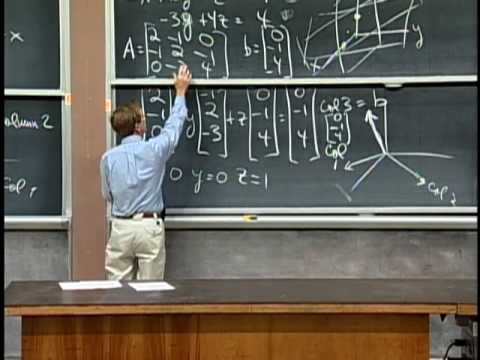
Lec 1 | MIT 18.06 Linear Algebra, Spring 2005
The first lecture of Gilbert Strang's MIT 18.06 Linear Algebra course, covering the geometry of linear equations.
Randy Pausch's Last Lecture: Achieving Your Childhood Dreams
Randy Pausch's 2007 last lecture at Carnegie Mellon, given as he was dying of pancreatic cancer.

Lecture 1A: Overview and Introduction to Lisp
The first lecture of MIT's 6.001 (SICP) with Abelson and Sussman, giving an overview of the course and an introduction to Lisp.

Lecture 1A | MIT 6.001 Structure and Interpretation, 1986
The first lecture of MIT's 1986 6.001 Structure and Interpretation of Computer Programs, given by Harold Abelson, introducing Lisp and the idea of computer science as the study of process.

The Most IMPORTANT Video You'll Ever See (part 1 of 8)
Part 1 of a lecture by physicist Albert Bartlett on the exponential function and its consequences for population growth, resource use and energy.
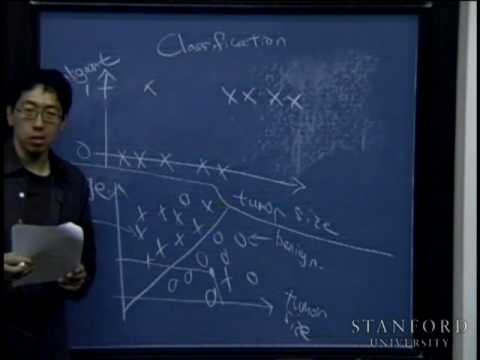
Lecture 1 | Machine Learning (Stanford)
The first lecture of Andrew Ng's Stanford CS229 Machine Learning course, giving an overview of the course.
Confessions of a Converted Lecturer: Eric Mazur
Harvard physicist Eric Mazur explains how he realized his students were memorizing rather than understanding, and how he changed his teaching.

The Coming Collapse of the Middle Class with Elizabeth Warren
Elizabeth Warren's 2007 Berkeley lecture, when she was a Harvard law professor, on why middle-class families are under growing financial strain.

RL Course by David Silver - Lecture 1: Introduction to Reinforcement Learning
The first lecture of David Silver's reinforcement learning course, introducing the field and its basic concepts.

Lecture 6: Version Control (git) (2020)
A lecture from MIT's Missing Semester course covering version control with git.

30 Essential Ideas you should know about ADHD, 1A Intro, Chronic Developmental Disability
The first clip from Russell Barkley's 30 Essential Ideas about ADHD series, introducing ADHD as a chronic developmental disability.

Category Theory 1.1: Motivation and Philosophy
The first lecture in Bartosz Milewski's category theory series for programmers.

Analogy as the Core of Cognition
Douglas Hofstadter's Stanford Presidential Lecture argues that analogy is the core of cognition, illustrating how concepts, categorization and thought arise from analogy-making.
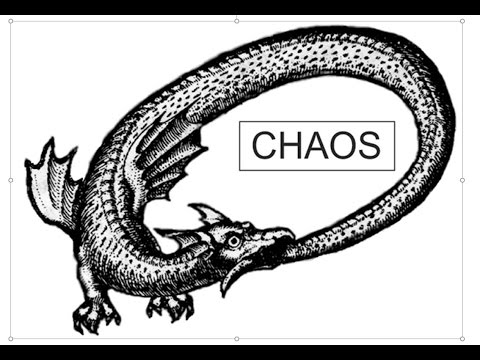
Lecture: 2017 Maps of Meaning 01: Context and Background
The first lecture of Jordan Peterson's 2017 Maps of Meaning course, setting out the Cold War context for his theory of belief and culture.

Richard Feynman Computer Science Lecture - Hardware, Software and Heuristics
A lecture by Richard Feynman on how computers work, using the analogy of a filing clerk that becomes progressively dumber and faster.

Richard Feynman - The.Character of Physical Law - Part 1 The Law of Gravitation (full version)
The first of Richard Feynman's 1964 Cornell Messenger Lectures, The Character of Physical Law, focusing on the law of gravitation.
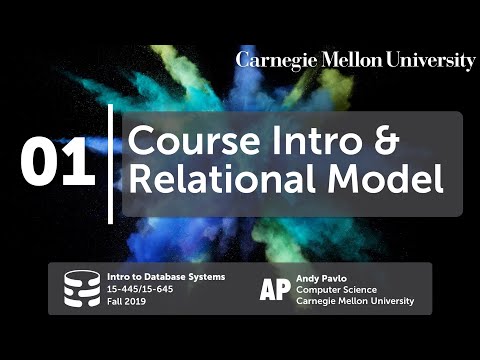
01 - Course Introduction & Relational Model (CMU Databases Systems / Fall 2019)
The first lecture of Andy Pavlo's CMU 15-445 Intro to Database Systems (Fall 2019), covering course introduction and the relational model.

Ep. 1 - Awakening from the Meaning Crisis - Introduction
The first episode of John Vervaeke's lecture series on the modern meaning crisis, tracing its history through philosophy, cognitive science, religion and psychology.