 PickVids
Best Computer vision, speech & NLP Videos
「Computer vision, speech & NLP」下面有93部被不同的人、在不同月份推荐过的视频。挑的时候先看对象:入门9部,适合还没学过的人;进阶25部,适合已经懂术语的人;普通向56部,按兴趣就能看;更硬的3部,留给想看推导或细节的人。这一类数量最多的是演示,所以它们的共同点是先看到做成了什么,再决定要不要追细节。常出现的频道包括Computerphile、Denis Shiryaev、Google TechTalks。目录给这个主题划的范围是:Perception and language AI: image recognition, object detection, OCR, speech recognition, text-to-speech, machine translation, natural language processing, face recognition, classical AI and expert systems.如果只看三部,就从《Bay Area Vision Meeting: Unsupervised Feature Learning and Deep Learning》开始,它负责把问题讲出画面;然后看《"Voice Driven Development: Who needs a keyboard anyway?" by Emily Shea》,换一种讲法或例子;最后看《Andrej Karpathy - AI for Full-Self Driving at Tesla》,留给已经有基础的人。页面按每页24部切开,顺序看的是被推荐跨越了多少个月,不是播放量。每条标题下面那一句是这部片子自己的内容说明,用来区分它在讲定义、过程、演示还是观点。点进去能看到推荐原话、原文链接和适合谁看。看的时候把强烈推荐当成有人明确叫你去看,把引用当成只是拿来举例,把批评留下来对照,不要把每条评论都当成同一力度。

George Hotz | Programming | Livecoding SLAM | twitchslam | Part1
A long livestream of George Hotz live-coding a toy SLAM implementation, twitchslam, over two days in May 2018.

Practical Deep Learning for Coders: Lesson 1
Lesson 1 of fast.ai's Practical Deep Learning for Coders, taught by Jeremy Howard.

[60 fps] The Flying Train, Germany, 1902
Neural-network upscaled, 60 fps, stabilized and colorized version of 1902 footage of the Wuppertal Schwebebahn suspended railway in Germany.

Hound Internal Demo
SoundHound's CEO demos Hound, a voice assistant, handling fast compound natural language queries with context and detailed criteria.

3-Sweep: Extracting Editable Objects from a Single Photo, SIGGRAPH ASIA 2013
A SIGGRAPH Asia 2013 research demo of 3-Sweep, a tool for extracting editable 3D objects from a single photo using a few user strokes.

Militarizing Your Backyard with Python: Computer Vision and the Squirrel Hordes
A PyCon 2012 talk by Kurt Grandis on building an automated water-squirting turret that uses Python and computer vision to detect and drive off squirrels from a bird feeder.
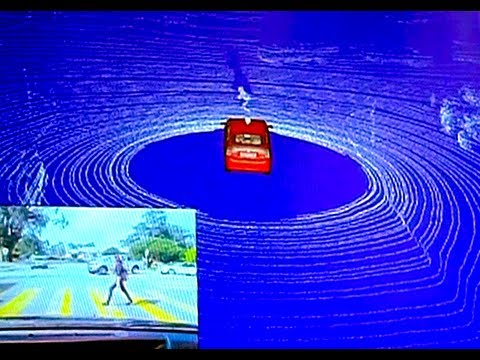
How Google's Self-Driving Car Works
Part 2 of the IROS 2011 keynote by Sebastian Thrun and Chris Urmson on Google's self-driving car.

Douglas Lenat: Cyc and the Quest to Solve Common Sense Reasoning in AI | Lex Fridman Podcast #221
Lex Fridman interviews Douglas Lenat, founder of Cyc, a decades-long project to encode common-sense knowledge and reasoning for AI.
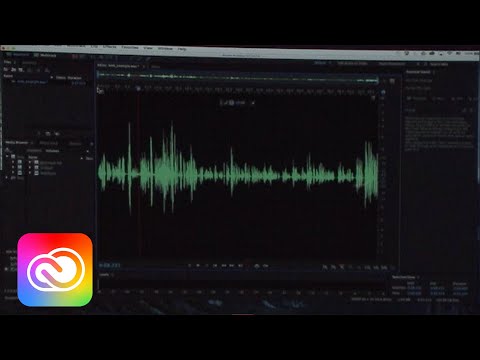
#VoCo. Adobe Audio Manipulator Sneak Peak with Jordan Peele | Adobe Creative Cloud
Adobe's VoCo demo from the MAX 2016 Sneak Peeks, co-hosted by Jordan Peele, showing software that changes words in a voiceover by typing new ones.

"Cursorless: A spoken language for editing code" by Pokey Rule (Strange Loop 2023)
Pokey Rule presents Cursorless, a spoken language designed for editing code by voice, built on tree-sitter parsing with smart structural and simple token-level primitives.

Glitch Tokens - Computerphile
Rob Miles explains "glitch" tokens, odd strings in large language model vocabularies that make the model produce gibberish.

Duolingo -- the next chapter in human computation | Luis von Ahn | TEDxCMU 2011
Luis von Ahn, creator of CAPTCHA and reCAPTCHA, presents Duolingo at TEDxCMU 2011.

Larynx Demo
A demonstration of Larynx, an offline open source neural text-to-speech system supporting nine languages.

[4k, 60 fps] A Trip Through New York City in 1911
Footage shot in New York City in 1911 by a Swedish film company, upscaled to 4K and 60 fps with neural networks and optionally colorized.

Geoffrey Hinton talk "What is wrong with convolutional neural nets ?"
Geoffrey Hinton gives an MIT talk on what is wrong with convolutional neural networks and introduces his capsules project.
Lecture 1 | Introduction to Convolutional Neural Networks for Visual Recognition
The first lecture of Stanford's CS231n course on convolutional neural networks for visual recognition.

Autonomous Car - what goes into sensing for autonomous driving?
Mobileye co-founder and CTO Amnon Shashua explains what goes into sensing for autonomous driving and whether end-to-end deep learning can work for it.

CS231n Winter 2016: Lecture1: Introduction and Historical Context
The first lecture of Stanford's CS231n Winter 2016 course on convolutional neural networks for visual recognition, introducing the course and the historical context of computer vision.

Burnistoun - Voice Recognition Elevator in Scotland
A Burnistoun sketch from BBC Scotland in which two men try to use a voice-recognition elevator that cannot understand their Scottish accents.

Human Computation
A 2006 Google TechTalk in which Luis von Ahn introduces human computation, using people's effort to solve problems like image recognition that computers cannot yet handle.

Facebook's Prototype VR Face Tracking Got Even Better
UploadVR covers a Facebook Reality Labs prototype that tracks facial expressions using cameras mounted in a VR headset.

High-Speed Robot Hand
A short demo from the Ishikawa Komuro Lab of a high-speed robot hand paired with a 1000fps vision system performing dexterous manipulation.

PREDATOR - Tracker that learns and improves
A demo of PREDATOR (TLD), a real-time object tracker that learns the appearance of its target and improves while it tracks.
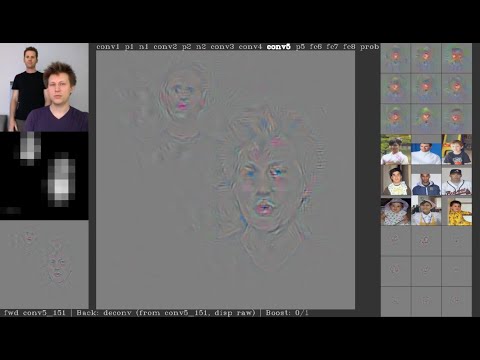
Deep Visualization Toolbox
A short demo of the Deep Visualization Toolbox, which shows the activations inside a convolutional neural network as it processes live camera input.