 PickVids
Best Probability & game theory Videos
「Probability & game theory」下面有52部被不同的人、在不同月份推荐过的视频。挑的时候先看对象:入门10部,适合还没学过的人;进阶3部,适合已经懂术语的人;普通向39部,按兴趣就能看;更硬的0部,留给想看推导或细节的人。这一类数量最多的是讲解,所以它们的共同点是用一个图像或类比把一个概念补上。常出现的频道包括Veritasium、Numberphile、CGP Grey。目录给这个主题划的范围是:Probability and decision theory: combinatorics, Statistics 110, Bayes theorem, paradoxes, game theory, prisoner's dilemma, Nash equilibrium, randomness, expected value.如果只看三部,就从《Why Being Delusional is a Superpower》开始,它负责把问题讲出画面;然后看《Why Your Vote Doesn't Count》,换一种讲法或例子;最后看《Once you understand game theory, you understand the world.》,留给已经有基础的人。页面按每页24部切开,顺序看的是被推荐跨越了多少个月,不是播放量。每条标题下面那一句是这部片子自己的内容说明,用来区分它在讲定义、过程、演示还是观点。点进去能看到推荐原话、原文链接和适合谁看。看的时候把强烈推荐当成有人明确叫你去看,把引用当成只是拿来举例,把批评留下来对照,不要把每条评论都当成同一力度。

Why Being Delusional is a Superpower
Veritasium examines the role of luck in success, with simulations and examples showing how small advantages and chance can compound.

Why Your Vote Doesn't Count
CGP Grey explains first-past-the-post voting and why it pushes elections toward two dominant parties.

Once you understand game theory, you understand the world.
Veritasium explores the Prisoner's Dilemma and Axelrod's tournaments, showing why tit-for-tat and forgiving strategies win in repeated games.

The Voting System That Should Replace Every Election
A short CGP Grey explainer on the alternative vote (instant runoff voting) versus first past the post, made around the 2011 UK referendum.

golden balls. the weirdest split or steal ever!
A Golden Balls episode in which one contestant announces he will steal, leading to an unexpected outcome in the split-or-steal prisoner's dilemma.

How lucky is too lucky?: The Minecraft Speedrunning Dream Controversy Explained
Matt Parker analyzes the Minecraft speedrunning controversy in which Dream was accused of cheating via improbably lucky drops.
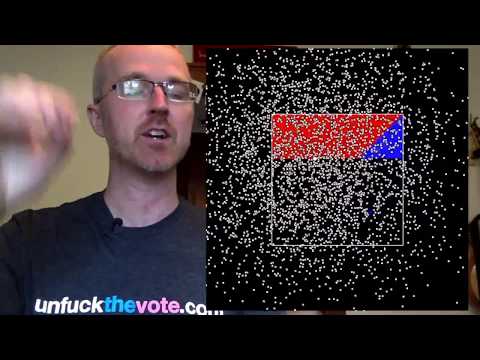
Animated Voting Methods
An animated simulation comparing single-winner voting methods such as plurality, instant runoff and STAR.
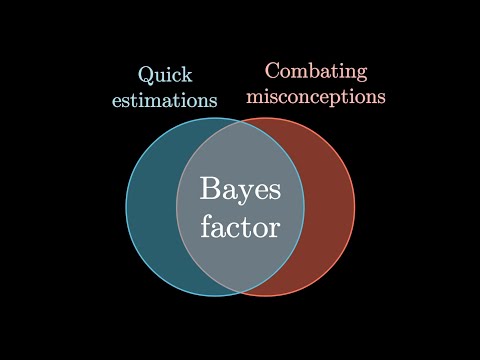
The medical test paradox, and redesigning Bayes' rule
3Blue1Brown explains why positive results on accurate medical tests are often false positives, and reframes Bayes' rule using likelihood ratios (Bayes factors) to update odds.

Is AI Safety a Pascal's Mugging?
Robert Miles examines whether the case for AI safety is a Pascal's mugging, a tiny probability of an enormous payoff.

How our voting system (and IRV) betrays your favourite candidate
The Center for Election Science explains favorite betrayal in instant-runoff voting: in some elections, ranking your favorite first can cause your least favorite to win.

2. Behavioral Evolution
Stanford biologist Robert Sapolsky lectures on the evolution of behavior, including the Prisoner's Dilemma and tit-for-tat strategies in animals.

Why do competitors open their stores next to one another? - Jac de Haan
A short animated TED-Ed lesson in which two competing ice cream vendors on a beach illustrate why rival shops cluster together.

Randomness is Random - Numberphile
Numberphile with Simon Pampena on how humans misunderstand randomness, including coin-flip sequences, run lengths and the gambler's fallacy.

John Rauser keynote: "Statistics Without the Agonizing Pain" -- Strata + Hadoop 2014
John Rauser's Strata 2014 keynote argues that programmers can learn statistics quickly by simulating random processes and shuffling data.

Derren Brown - The System (Full)
Derren Brown's TV special in which he convinces a person he has a system for predicting horse race winners, demonstrating how survivorship bias and selective outcomes can fake predictive powers.

A visual guide to Bayesian thinking
Julia Galef uses pictures to explain Bayes' rule, then tells three personal stories showing how she applies it to improve her thinking.

Math Encounters -- Five Balls, Two Hands: The Patterns of Juggling -- Colin Wright (Presentation)
Mathematician Colin Wright demonstrates juggling and explains the mathematics of juggling patterns, including notation that led to new throwing patterns.

Lecture 1: Probability and Counting | Statistics 110
Lecture 1 of Harvard's Statistics 110 with Joe Blitzstein, introducing sample spaces, the naive definition of probability, counting, binomial coefficients and the sampling table.
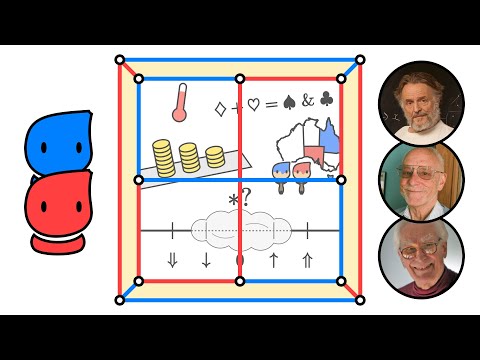
HACKENBUSH: a window to a new world of math
Owen Maitzen's animated hour-long introduction to Hackenbush, a simple combinatorial game, and how its strategy leads to surreal numbers and the roots of the number system.

GDC 2010: Sid Meier Keynote - "Everything You Know is Wrong"
Sid Meier's GDC 2010 keynote on how players perceive probability in games, including how Civilization's odds were adjusted because players misjudged them.

Simulating Green Beard Altruism
Primer simulates green beard altruism, where individuals recognize and help others carrying a shared marker, and shows how imposters affect its evolution.

The Fermi Paradox: Dark Forest Theory
Isaac Arthur examines the Dark Forest theory, Cixin Liu's proposed solution to the Fermi Paradox in which civilizations stay silent and may destroy any that reveal themselves.

You Can Win the Presidency With 22% of the Vote
A short CGP Grey animation showing how the US electoral college lets a candidate win the presidency with as little as about 22 percent of the popular vote.

The Best (and Worst) Ways to Shuffle Cards - Numberphile
Persi Diaconis explains on Numberphile the mathematics of card shuffling, including why seven riffle shuffles are needed to randomize a deck and how different shuffles compare.