 PickVids
Best Probability & game theory Videos
「Probability & game theory」下面有52部被不同的人、在不同月份推荐过的视频。挑的时候先看对象:入门10部,适合还没学过的人;进阶3部,适合已经懂术语的人;普通向39部,按兴趣就能看;更硬的0部,留给想看推导或细节的人。这一类数量最多的是讲解,所以它们的共同点是用一个图像或类比把一个概念补上。常出现的频道包括Veritasium、Numberphile、CGP Grey。目录给这个主题划的范围是:Probability and decision theory: combinatorics, Statistics 110, Bayes theorem, paradoxes, game theory, prisoner's dilemma, Nash equilibrium, randomness, expected value.如果只看三部,就从《Why Being Delusional is a Superpower》开始,它负责把问题讲出画面;然后看《Why Your Vote Doesn't Count》,换一种讲法或例子;最后看《Once you understand game theory, you understand the world.》,留给已经有基础的人。页面按每页24部切开,顺序看的是被推荐跨越了多少个月,不是播放量。每条标题下面那一句是这部片子自己的内容说明,用来区分它在讲定义、过程、演示还是观点。点进去能看到推荐原话、原文链接和适合谁看。看的时候把强烈推荐当成有人明确叫你去看,把引用当成只是拿来举例,把批评留下来对照,不要把每条评论都当成同一力度。

Bayes theorem, the geometry of changing beliefs
3Blue1Brown presents Bayes' theorem through a geometric diagram, showing how evidence should update beliefs.

Jordan Peterson - Pareto Distributions
A short clip of Jordan Peterson explaining Pareto distributions, using Soviet farm collectivization and the resulting famine as context.

Cambridge Ideas - Professor Risk
David Spiegelhalter, Professor of the Public Understanding of Risk, uses statistics to weigh everyday risks such as bacon sandwiches and cycling.

Why is this number everywhere?
Veritasium explores why the number 37 turns up so often, drawing on Tom Magliery's collection of 37 sightings and a poll of about 200,000 people asked to pick a random number.

If money was no object, should you run every medical test?
A doctor from Medlife Crisis explains in under three minutes why even a rich patient should not simply order every medical test, touching on pre-test probability and Bayesian reasoning.

Naive empiricism, terrorism & Ebola.
Nassim Taleb argues that evidence on terrorism risk presented in media is statistically naive, using extreme value theory without math to separate fat-tailed risks like Ebola and terrorism from thin-tailed ones.

Math Magic
Vsauce explores math through card tricks and big numbers, including an animation of how enormous 52 factorial, the number of deck orderings, really is.
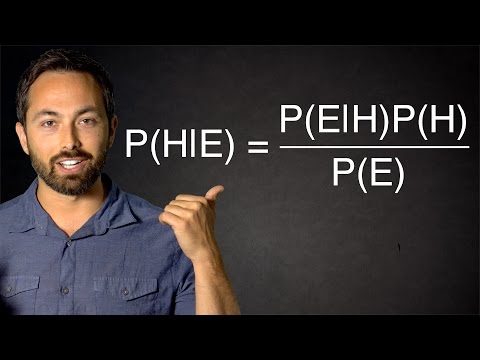
The Bayesian Trap
Veritasium explains Bayes' theorem with examples and introduces the 'Bayesian trap', where repeated events get mistaken for inevitable ones.

AI Ethics, Impossibility Theorems and Tradeoffs - Chris Stucchio | Crunch 2018
Chris Stucchio presents the ethical principles behind algorithmic decision making and shows with examples from lending, criminology and education that they cannot all be satisfied at once.

How We Should Vote (Range Voting)
A six-minute explainer from Undefined Behavior on range (score) voting.

Clutching at Random Straws, Matt Parker | LMS Popular Lectures 2010
Matt Parker's LMS popular lecture on how seemingly incredible results can be meaningless random patterns.

Simulating alternate voting systems
Primer uses simulations to compare voting systems such as first-past-the-post, approval, ranked choice and others.

The mathematics of love | Hannah Fry
Mathematician Hannah Fry's TED talk on patterns in dating and mate-seeking, including optimal stopping and three math-backed tips for finding a partner.

The Lava Lamps That Help Keep The Internet Secure
Tom Scott visits Cloudflare's San Francisco office to show the wall of lava lamps whose camera feed is used as a source of entropy for random number generation.

Darts in Higher Dimensions (with 3blue1brown) - Numberphile
Numberphile talks with Grant Sanderson of 3Blue1Brown about a darts puzzle with a shrinking bullseye.

The Unbeatable Game from the 60s: Dr NIM
Matt Parker of Stand-up Maths explains single-pile Nim and the trick that wins it, using Dr NIM, a 1960s mechanical plastic computer that plays perfectly.

Crowd Wisdom Principles
A ten-minute explainer from Hypermind on the wisdom of crowds, covering Galton's discovery and the diversity theorem.

The Strange Math That Predicts (Almost) Anything
A Veritasium video on how a feud between Russian mathematicians led to Markov chains and the modern prediction algorithms built on them.
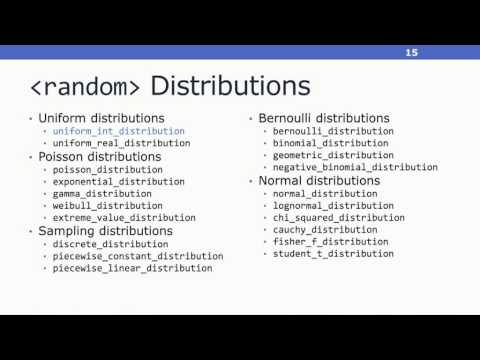
rand() Considered Harmful
Stephan T.

Antifragille: Things That Gain from Disorder | Nassim Nicholas Taleb | Talks at Google
Nassim Nicholas Taleb talks at Google about his book Antifragile, on systems that gain from disorder and volatility.

BBC - The Code - The Wisdom of the Crowd
Marcus du Sautoy of the BBC demonstrates the wisdom of the crowd, showing that averaging many guesses of jelly beans in a jar lands near the true count.

Bertrand's Paradox (with 3blue1brown) - Numberphile
Numberphile interviews Grant Sanderson of 3blue1brown about Bertrand's paradox, where different reasonable ways of picking a random chord of a circle give different probabilities.

Why was Biden's win calculated to be ONE IN A QUADRILLION?
Matt Parker of Stand-up Maths examines the Texas Supreme Court filing claiming Biden's 2020 win had a one-in-a-quadrillion chance.
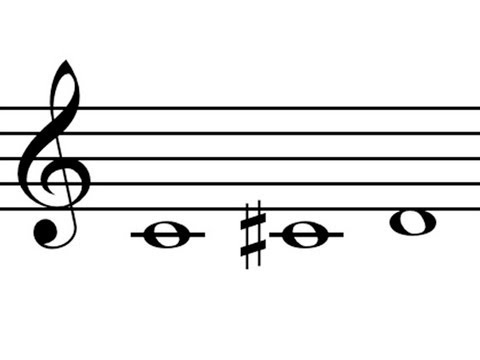
Will We Ever Run Out of New Music?
Vsauce asks whether music will ever run out of new melodies.